“The property called us.” That’s what a towed resident hears when they call the impound lot, and then they walk into your leasing office wanting to know who made the decision to tow their car.
In Georgia, the answer has to be someone on your side, every time. State law doesn’t let a tow company sign an agreement to patrol your lot and pick off cars on its own.
Each tow must be requested that day, for that specific vehicle, by a person your towing contract names. Then the owner or a designated agent signs and dates a written tow authorization the same day. The rules are stated in O.C.G.A. 44-1-13, the Department of Public Safety (DPS) towing rules, and DPS caps what the tow company can charge.
A single community in Decatur and a portfolio spread across metro Atlanta and Savannah answer to one set of state rules. We have listed them below, in the order your office meets them: who may make the call, what the same-day authorization and the signs need, what a tow or boot company may charge, who carries the risk of a bad tow, and the cracks behind most disputes.
Key takeaways
- A Georgia tow company may not have an agreement to watch your lot for violations. It tows only “upon call” from your side, one request at a time. O.C.G.A. 44-1-13(f).
- Each tow is requested on the day it happens, for a named vehicle, by someone listed in your contract with the tow company. DPS Rule 570-38-7-.15.
- Your owner or designated agent signs and dates the tow authorization on the date of the tow. It lists the vehicle’s make, model, color, and plate.
- Signs go within 50 feet of each entrance, at least 12 by 18 inches, with the tow company’s details, its fees, and its hours, and they must be up 24 hours before any tow can happen. Rule 570-38-7-.14.
- DPS caps a standard car tow at $228 and daily storage at $33, with the first 24 hours of storage free. Maximum Rate Tariff No. 5.
Who can call in a tow at a Georgia apartment community?
The person entitled to possess the property, or their authorized agent, has the right to have a trespassing vehicle removed (O.C.G.A. 44-1-13(a.1)). At an apartment community, that’s the owner or whoever the owner has authorized in writing to act for it. The DPS rules then turn that right into two concrete steps.
First, the contract. A tow company can’t tow nonconsensually from your lot without a contract signed by the property owner or its authorized agent, on the form DPS prescribes. The contract lists the tow company’s name, address, and phone number, its impound lot, and its hours. It must also list the names and contact numbers of the people authorized to request a tow from your property (Rule 570-38-7-.15(1)).
Second, the request. The tow company may only tow a vehicle that someone on that list has “specifically and individually requested on the day the removal takes place.” The request can be a phone call or in writing, and it has to identify the vehicle to be towed (Rule 570-38-7-.15(2)).
So the names on your contract are a staffing decision. Keep the list to people who can actually check a car against your permit list, and update it when someone leaves.
The tow company can’t patrol your lot for you
Georgia makes it unlawful, with a $1,000 fine, for a towing firm to agree to provide “automatic or systematic surveillance” of a property so it can remove vehicles. The only exception is a call from the person in possession of the property “for each individual case of trespass” (44-1-13(f)).
In Georgia, the decision to tow a specific car comes from the property side. If an operator pitches a standing “we’ll keep the lot clear” arrangement, ask your attorney how it works with 44-1-13(f) before you sign.
No one can pay your property for the right to tow
The same subsection makes it unlawful, again with a $1,000 fine, for anyone to pay a property owner or the person in possession “any fee or emolument, directly or indirectly,” for the right to tow or boot a vehicle there. Since HB 551 took effect on January 1, 2026, that ban covers booting companies and tow firms.
That answers a question residents ask online: do apartment complexes get paid by towing companies? In Georgia, they’re not allowed to be.
What goes on the same-day tow authorization?
Georgia’s paperwork rule is short and strict. On the date of the tow, the property owner or the owner’s designated agent signs and dates a written tow authorization, also called a tow bill, on a form DPS prescribes. It can change hands in person at the scene, by fax, or by email, as long as it’s on that day (Rule 570-38-7-.15(2)). It has to include:
| The authorization must include | In practice at your community |
|---|---|
| The name of the business or property | Your community’s name as it appears on the contract |
| The name and title of the owner or designated agent signing | A named person on your contract’s list, not “management” |
| The name of the person who requested the removal | Who made the call, which may be a different person from the signer |
| The specific location of the requested removal | The space or row, not just the street address |
| The vehicle’s make, model, color, plate state, and plate number | Read off the car, not copied from a complaint |
| For an emailed authorization, a statement that the email authorizes the removal | One fixed sentence in your email template |
The tow company keeps the phone records, faxes, and emails behind each request, plus the signed authorization, for three years (Rule 570-38-7-.15(8)). If a resident disputes a tow next spring, that’s the file you’ll be asked about.
Pro Tip: Build the authorization as a fill-in email template with all six required items already in it. Whoever requests the tow fills in the vehicle and the space, signs it, and sends it before the truck leaves. A form signed the next morning doesn’t meet a rule that says “on the date of the tow”.
What does Georgia require on a towing sign?
The sign rule is written to property owners directly. You place the signs, and a tow is only lawful if they’ve been up and in substantial compliance for at least 24 hours before it (Rule 570-38-7-.14(1) and (6)). The specification:
- Placement: within 50 feet of each designated entrance to the parking area, or as close as terrain and landscaping allow. Where there’s no designated entrance, signs must be visible from every parking space.
- Size: at least 12 by 18 inches, with lettering of at least 3/4 inch. The words “Private Parking” must be in bold, at least 1 1/2 inches high.
- Height: at least 4 feet above grade at an entrance, or 6 feet where there’s no designated entrance, with nothing blocking the view.
- Content: a warning that unauthorized vehicles will be towed; the tow company’s name, address, and phone number; the impound lot where cars can be picked up; the towing fee and daily storage fee; hours of operation; and accepted payment methods.
The statute adds its own notice requirement: the posted notice tells drivers where to recover the vehicle, what recovery costs, and the form of payment (44-1-13(a.1)). Communities of four or fewer residential units don’t have to post. Every apartment community bigger than that does.
Four details catch Georgia properties out:
- Every company on the sign: If you use more than one tow company, your signs have to carry the details of all of them (Rule .14(8)).
- Stand-alone signs: The towing sign has to be separate from your other signage and can’t include anything unrelated to towing (Rule .14(4)). Don’t add it to the bottom of your pool rules or your community map.
- The fee you print is the fee you get: If a sign lists “minimum” fees, DPS reads that as the actual rate for the smallest class of vehicle, so a rate increase doesn’t let the operator charge more than the sign says (Rule .14(5)).
- Signs come down when the contract ends: They have to be removed within 15 days after the contract ends or you withdraw authorization (Rule .14(7)). Plan the swap so there’s no day when the old company’s sign is down and the new one hasn’t hit its 24 hours.
The signs ParkM supplies do a different job. Ten standard permit signs come with a ParkM launch, and a guest can scan the QR code on one to buy a permit on the spot. They tell drivers how to park legally, not who tows, so they can’t stand in for the DPS towing sign you post yourself. Rule .14(4) keeps the two apart anyway.
What can a Georgia tow company charge?
DPS sets the maximum, and every towing firm in the state works under it. Maximum Rate Tariff No. 5 took effect on June 17, 2024, and it covers vehicles towed from private property without the owner’s consent (DPS Tariff No. 5). For the cars your residents and guests drive, those under 10,000 pounds gross vehicle weight rating (GVWR):
| Charge | Maximum under Tariff No. 5 |
|---|---|
| Removal (tow) | $228 |
| Storage, first 24 hours after removal | No charge |
| Storage on any day the impound lot is closed | No charge |
| Daily storage after that | $33 |
| Daily storage, electric vehicle | $60 |
| Drop fee: car hooked up but not yet off the property, driver returns with the key | $130 |
| Police notification fee, within the first 24 hours | $26 |
| Police notification fee, after 72 hours | $65 (notification fees capped at $91 in total) |
| After-hours release fee | $65 |
Heavier vehicles carry higher caps (removal up to $390 for 10,001 to 20,000 pounds). After 30 days, the state’s abandoned vehicle process takes over.
Those caps are all-in. A tow company can’t add charges for dollies, lifts, or any other equipment, and can bill only what the tariff lists (Rule 570-38-7-.13(7)). A city can require lower rates inside its limits but can’t allow higher ones (44-1-13(b)(2)). The tariff’s own rates may only be charged where your posted signs meet Rule .14.
The DPS rules also set how the release works. You don’t enforce these, but residents will quote them to your team:
- Not hooked yet: if the driver comes back with the key before the car is hooked up, it isn’t towed, and there’s no fee (Rule .16(1)).
- Hooked, still on the property: the driver pays only the drop fee and leaves with the car (Rule .16(2)).
- Getting it back: an attendant has to be at the impound lot during business hours five days a week, plus four hours on a sixth day, and reachable by phone 24 hours a day (Rule .17).
- Payment: cash, traveler’s checks, money orders, certified or cashier’s checks. Cards are optional, but there’s no card surcharge (Rule .18(2)).
- Where the car goes: a fenced, lit, secure lot in the county of the tow company’s office, never a “drop zone” (Rule .21).
When an operator pitches for your lot, ask to see their signed DPS contract form, their posted rates, and their impound address. For the other questions worth asking them, our post on choosing a tow company for apartments lists them.
What changed for booting in 2026?
Since January 1, 2026, booting in Georgia is regulated by the state. HB 551 amended 44-1-13 so that only operators holding a DPS permit, working in a city or county that has authorized booting by ordinance or resolution, may boot a trespassing vehicle (HB 551, Section 9). If your jurisdiction hasn’t authorized it, nobody may boot on your lot.
Where it’s allowed, the posted notice now has to include the contact for removing the boot, the boot removal fee, and the full legal names of both the booting company and the property owner (44-1-13(a.1)). Your owner’s name goes on that sign, so check it with whoever holds title.
DPS Vehicle Immobilization Tariff No. 2, in effect since February 16, 2026, sets the rest (DPS booting tariff page):
- The fee: at most $75 a day for a passenger vehicle, motorcycle, or truck up to 26,000 pounds GVWR, all-inclusive.
- Payment: cash, at least one major credit card, and at least one major debit card, with no card surcharge. Cash-only booting is out.
- Response time: the operator arrives within 60 minutes of a removal request.
- The driver who comes back: if the driver returns before the boot is on, the car is released at no charge.
- No payments to you: fees to property owners or managers are prohibited.
DPS also required booting companies to have signs at each entrance by February 15, 2026, visible at night, with the company name, a 24-hour phone number, accepted payments, and flat rates by vehicle weight.
Who is liable for a wrongful tow in Georgia?
Georgia gives the driver a direct claim. Anyone who suffers injury or damages from a violation of 44-1-13 can sue for actual damages, presumed to be at least $100, plus court costs. For an intentional violation, the court awards three times actual damages (44-1-13(e)).
That right is tied to any violation of the section, not only the tow company’s. The posting duty in 44-1-13(a.1) and the sign rule in Rule .14 are both yours, so a missing or wrong sign is a violation that starts in your office.
The tow company carries its own exposure:
- No fees for a violator: No fees are allowed for removal or storage by a firm found to be in violation of 44-1-13, and DPS can impose a civil penalty of up to $2,500 (44-1-13(b)(1)).
- Fees blocked during a violation: DPS can bar a towing firm from charging fees for any tow done while it was out of compliance (Rule 570-38-7-.13(9)).
- The $1,000 fines: A patrol agreement or a payment to the property is a $1,000 fine per 44-1-13(f).
The fine is rarely the biggest cost, though. When a Georgia tow is disputed, the first question is who on your team asked for it. Answering that can take a manager’s whole morning, and the regional manager usually hears about it too. Residents don’t expect perfection. They do expect the tow to be right.
Where Georgia communities make mistakes
Disputed tows often fail on the request or the paperwork, not the sign. Managers describe the result on ParkM’s sales calls in plain terms: “we’ve had quite a few people get towed that weren’t supposed to get towed.” Another put it this way: “I know we’ve all had a resident towed who maybe shouldn’t have been.”
These are the patterns behind those tows.
The standing order
A previous manager told the tow company to “take anything without a permit after midnight.” It felt efficient, and it’s the systematic arrangement 44-1-13(f) bars. Each tow needs a request from your side.
The request from someone who left
Your contract still lists the assistant manager who moved to another property in March. The tow company takes her call because her name is on the form. Update the contract list the day someone leaves.
The form signed tomorrow
The courtesy officer calls at 1 am, the truck leaves at 1:20 am, and the authorization gets signed when the office opens. The rule says on the date of the tow.
The guest who paid at 11 pm
A resident’s guest pays for a permit late at night. The person requesting the tow is working from a list printed that afternoon. The car is towed, and the receipt on the guest’s phone says it shouldn’t have been.
The sign that went up this morning
New signs went up with the new tow company on Monday at 9 am. The first tow happened Monday night, inside the 24-hour rule .14(6) requires.
What ParkM does before the call
Georgia puts the decision to tow a specific car in your office’s hands. That makes the list your team checks before it calls the most important step. If the list is a day old, the request is only as good as yesterday.
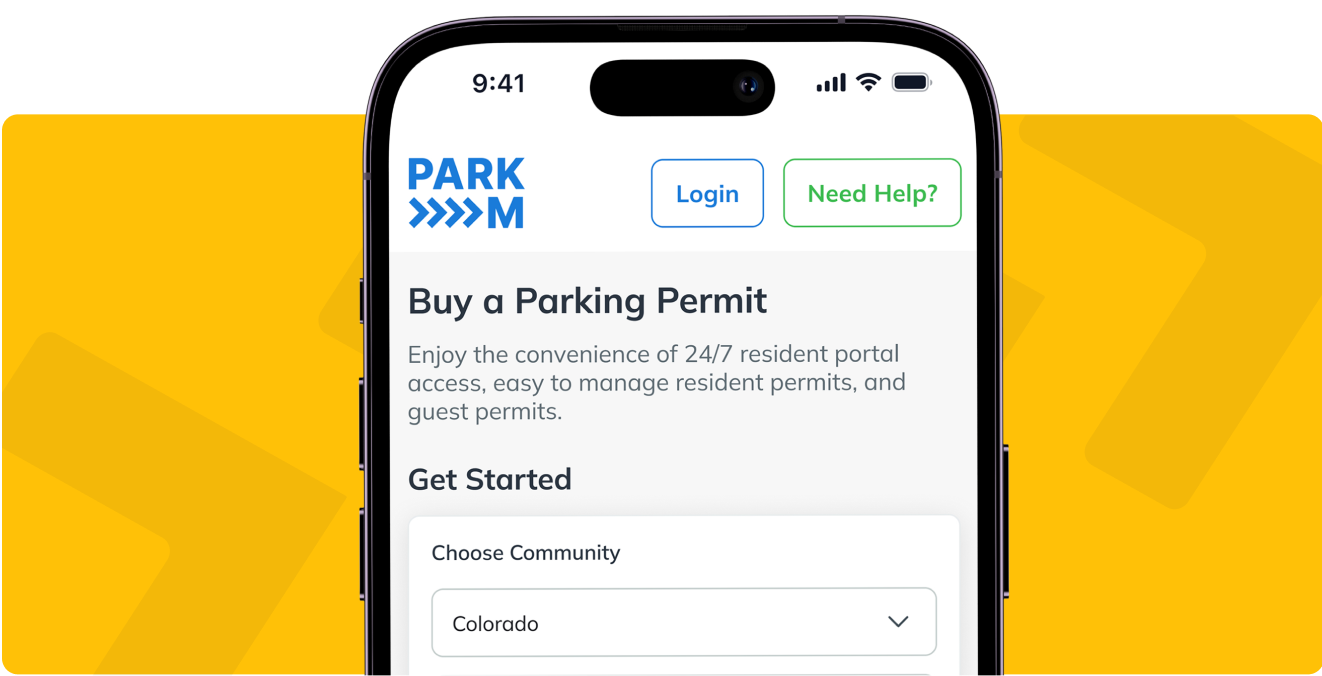
ParkM keeps that list current. When a resident or guest buys a permit, it shows on the list right away, so the plate your team looks up before the call reflects a purchase made a minute ago, not a printout from this morning.
Whoever makes the request for your community can look the plate up in the property manager portal and request a tow for that vehicle from the portal. The signed authorization the DPS rule asks for is still a separate step for your team.
Staff and vendor cars sit on a no-tow list, and every enforcement action is timestamped. If a tow is questioned months later, that timestamp is what you set beside the tow company’s three-year file.
The tow itself stays with the Georgia tow company your contract names. ParkM doesn’t tow or boot cars. Your partner works under the terms you agree to, and ParkM’s software shows them which plates have a live permit. Our page on parking enforcement for apartments shows who handles each part.
ParkM is confident enough in the accuracy of its verification technology to cover the cost of a wrongful tow, plus storage fees up to 24 hours. The no-bad-tow guarantee page sets out the terms.
“I would absolutely recommend ParkM to another property manager. The system works, the reporting is reliable, and the team helps us resolve issues quickly and efficiently.”
Stephanie Coats, Property Manager, Lenox Cooper Apartments, TX
Here’s the part your owners will like: ParkM is no cost to the property. Residents and guests pay for their permits themselves, so ParkM doesn’t add a line to your budget.
If your community is in metro Atlanta, our page on multifamily parking in Atlanta covers the local setup. Book a demo to see the list your team would check before a tow.
A Georgia checklist before your office makes the next call
Go through this with your tow partner and your attorney. Both of them work with these rules, and this page is a summary, not a substitute for either of them.
- Pull your towing contract and check that it’s on the DPS form, with the tow company’s details, impound lot, hours, and a current list of who may request a tow.
- Measure your signs against Rule 570-38-7-.14: within 50 feet of each entrance, 12 by 18 inches, “Private Parking” in 1 1/2 inch bold, 4 feet up, fees and hours printed, and every contracted tow company listed.
- Keep the towing sign separate from community rules, permit signs, and maps.
- Write the authorization template with all six required items, and make signing it on the night part of the request.
- Retire any standing instructions to the tow company. Every tow is a call from your side.
- Turn down any payment offered for the right to tow or boot on your lot, whatever it’s called.
- Check your city or county. Cities can license tow firms, set lower rates, and decide whether booting is allowed at all (44-1-13(b)(2), (d)). If your community is inside a city’s limits, read its towing and booting rules too.
- If you boot, confirm your jurisdiction authorizes it, your operator holds a DPS permit, and your owner’s full legal name is on the sign.
What Georgia managers ask about towing
How much can a towing company legally charge in Georgia?
For a standard car under 10,000 pounds GVWR, DPS Maximum Rate Tariff No. 5 caps the tow at $228 and storage at $33 a day, with the first 24 hours free. A drop fee of up to $130 applies if the car was hooked up but hadn’t left. Notification fees are capped at $91 in total, and after-hours release at $65. A city can set lower caps, never higher.
Do apartment complexes get paid by towing companies in Georgia?
They’re not allowed to. O.C.G.A. 44-1-13(f) makes it unlawful for anyone to pay a property owner or the person in possession any fee, directly or indirectly, for the right to tow or boot a vehicle there. Booting Tariff No. 2 repeats the ban for booting companies.
Does Georgia require a warning on the windshield before a tow?
Neither 44-1-13 nor the DPS towing rules require a separate warning on the windshield. They require compliant signs posted for at least 24 hours, a contract on the DPS form, a request for that vehicle on the day, and a signed authorization. If your lease or parking policy promises residents a warning first, keep that promise, because residents will hold you to it.
Can a resident call the tow company about a car in their space?
The tow company may only act on a request from the property owner or its contractually designated agent, and your contract lists who may request a tow. A resident who isn’t on that list should call your office or courtesy line, and someone on your side should make the request.
Does ParkM tow vehicles?
No, and it doesn’t decide which car goes either. Under Georgia’s rules, someone on your contract list makes that decision, and the tow or boot company you contract with does the towing. ParkM is digital permit software. It shows your partner which plates hold a live permit and timestamps every enforcement action. ParkM covers the cost of a wrongful tow, plus storage fees up to 24 hours.
The short version
In Georgia, no tow starts without your office. The tow company can’t patrol, can’t work from a standing order, and can’t act until someone on your contract’s list authorizes and signs for a same-day tow. The signs, the updated permit list, the tow request, and the same-day signature are your team’s responsibility.
Handle those well, and a disputed tow comes down to a form, a timestamp, and a short conversation. Miss one, and the resident at your desk may have a claim for damages under 44-1-13(e). For a state that works differently, where the person signing has to be on the property, see California private property towing laws. For the rules in other states, start with towing from private property, and for what to say to a resident the morning after, see towing from an apartment complex.
Your team makes every tow request, so the list it checks should be current to the minute. To see the lookup your office would run before each call, book a demo and keep your Georgia towing contract in hand.
This page summarizes O.C.G.A. 44-1-13, Georgia Department of Public Safety Rules 570-38-7, Maximum Rate Tariff No. 5, and Vehicle Immobilization Tariff No. 2 in general terms. It is not legal advice. Cities and counties can add their own rules, and the law changes. Confirm what applies to your property with your attorney and your tow partner before you rely on it.
Rules read November 2026.