A towing company for apartments works for your community, not for your parking vendor, and your community holds that agreement directly. Before you sign one, check the license your state requires, the insurance, where the storage lot sits and when it opens, how a vehicle is released and for how much, and whether the operator photographs every car before it moves.
That list is short on purpose. It is also the part almost nobody does, because a tow company usually arrives as a recommendation and the agreement gets signed on the strength of it.
Key takeaways
Your community sets enforcement terms directly with its own tow or boot company. ParkM is not the tow operator and does not sign that agreement on your behalf.
The rules are state law, and in many places city ordinance on top. Texas specifies the sign down to the letter height, California requires the storage lot within 10 miles of your property, Colorado requires a photograph before the vehicle is connected.
A tow is only as good as the record behind it, so “is this car allowed to be here” has to be answerable in seconds, at 11pm, by somebody who is not in your leasing office.
A wrongful tow costs goodwill and it can cost money. Under Florida law, whoever improperly caused the removal is liable for the towing, transportation and storage costs, damages, attorney’s fees and court costs.
ParkM covers the cost of a wrongful tow, plus storage fees up to 24 hours.
“Do we hire the tow company, or does our parking vendor?”
You hire it. This is one of the three questions ParkM gets asked most before a community implements our system, and prospects usually arrive assuming the opposite answer, so it is worth being blunt about.
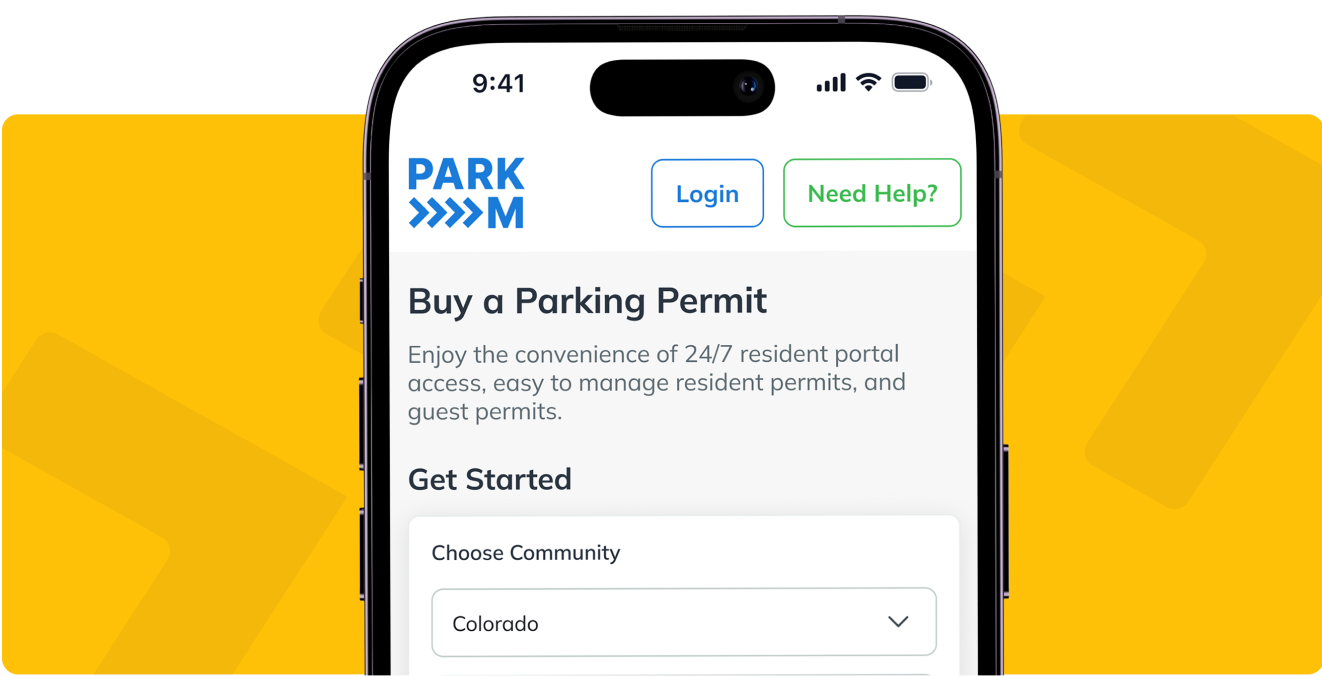
The property sets enforcement terms directly with its own tow or boot company. That agreement is between your community and that operator. ParkM is the permit and visibility layer: it holds the record of which license plates are authorized in your lot and puts that record in your enforcement partner’s hand. ParkM does not tow, does not employ the driver, and does not replace the company you already work with.
Three parties, three jobs. You write the parking policy and decide what happens to a car that breaks it. ParkM records who is authorized and makes that answerable at 2am. Your tow operator is the only party that moves a vehicle, and the only party standing at the car when the decision is made.
If your community has no tow partner, ParkM’s published answer is a referral rather than a subcontract: “We will assist you in finding a suitable company from our list of preferred vendors.” The agreement is still yours.
What ParkM does take off your desk is the phone. It handles resident and guest parking support directly, including the call that comes in after a tow, so the argument does not land on your leasing team. And ParkM covers the cost of a wrongful tow, plus storage fees up to 24 hours. The mechanism sits on how ParkM works and in the property manager FAQs.
What to verify before you sign
This section is about the vendor, not about whether a tow is lawful at your community in the first place. That question has a different answer in every state and it is covered separately in towing from private property.
Requirements vary by state and, in a lot of markets, by city. Florida says so in the statute itself: the state rules are minimum standards and do not stop a municipality or county adding more, including regulating what a tow may cost. So the table below is not a national rule. It is a checklist you take to your own jurisdiction and your own counsel.
| What to verify | What good looks like | Why it bites |
|---|---|---|
| License | Current, in the operator’s legal name, covering the company, the truck, the driver and the storage facility where your state licenses those separately | Texas licenses tow companies, tow trucks, tow operators, vehicle storage facilities and VSF employees individually. An unlicensed link in that chain becomes your problem too |
| Insurance | A certificate naming your community, with a renewal date you have diaried | The damage claim arrives months after the tow and lands on whoever is still reachable |
| Storage lot location | A named address you have driven to | California requires the lot within 10 miles of the property. Florida requires 10 miles in counties over 500,000 people, 15 miles below that |
| Storage lot hours | Staffed hours in writing, plus a real after-hours release path | Florida requires the lot open 8:00am to 6:00pm on any day the firm is towing, a posted number reachable at all times when closed, and the operator back on site within one hour of a call |
| Release fees | The full schedule, including the after-hours gate fee | California caps the after-hours gate charge at one-half of the hourly tow rate. Colorado lets an owner retrieve a vehicle on paying 15 percent of the fees or $60, whichever is less |
| The drive-off rule | The operator stops and releases when the owner arrives before the truck leaves | California caps that charge at one-half of the regular tow charge, Florida at one-half of the posted rate. It is a common flashpoint |
| Photo evidence | Photographs of the vehicle, the violation and the vehicle’s condition, taken before it is connected, and retained | Colorado requires it, and failure to produce it creates a rebuttable presumption that the operator caused the damage or that the tow was never authorized |
| Authorization | Per-tow authorization from your team, recorded, with the standing exceptions written down and short | California bars handing a tow company blanket discretion, except within 15 feet of a hydrant, in a fire lane, or blocking an entrance or exit |
| Response time | A number, by time of day, and a named after-hours contact | “We are usually quick” is not a service level, and 11pm is when you need one |
| Rate schedule | Filed and posted where the law requires it | Florida requires current rates filed with local law enforcement and posted at the storage site, with the written contracts authorizing removals |
Every figure there is checkable at its source: California Vehicle Code section 22658, Florida Statutes section 715.07, Colorado’s HB22-1314, and the Texas towing laws and rules. In the other 46 states the equivalent exists, and your operator should be able to name it without looking it up.
Walk your signs before you sign anything
Signs are not decoration and they are not generic. Several states specify them to the inch, and a sign that misses the spec can make an otherwise reasonable tow indefensible.
Texas is the clearest example: at least 18 inches by 24 inches, weather-resistant, the international towing symbol in bright red at least 4 inches high, “Towing Enforced” beneath it in white on bright red at least 2 inches high, then who may park there and the days and hours towing is enforced in bright red at least 1 inch high, and a 24-hour phone number at the bottom. One sign at the side of each driveway or curb cut, bottom edge 5 to 8 feet off the ground. TDLR publishes sample signs and the full specification, including a resident and visitor version.
California and Florida specify size, lettering and placement differently, and Florida also requires the sign to have been in place at least 24 hours before any vehicle is towed. Walk your entrances with your operator and photograph what is actually mounted there today. It is the check most communities skip and the first one to surface in a dispute.
The questions to ask on the call
Ask these in this order and write the answers down. A good operator answers all of them without hedging, and the hedging is the signal.
Licensing and cover
- What licenses do you hold, in what legal name, and when do they expire?
- Is your storage facility licensed separately, and by whom?
- Can you send a certificate of insurance naming our community this week?
- Has your license ever been suspended or subject to a complaint, and how was it resolved?
The lot
- Where exactly is the storage lot, and what is the drive time from our address?
- What hours is it staffed, and what happens at 1am on a Sunday?
- What does an after-hours release cost, and who answers that number?
- Is the lot lit well enough for an owner to inspect a car for damage before accepting it?
The tow itself
- Who at our community may authorize a tow, and how do you record that authorization?
- What do you photograph before a vehicle is connected, and how long do you keep it?
- What do you check at the vehicle before you hook up?
- If the owner walks up before you leave the property, what happens and what do you charge?
- Do you patrol, or do you only respond when we call?
- How long does it take you to learn a new enforcement app? (ParkM’s own answer, for context, is 10 to 20 minutes.)
Afterwards
- What is your full rate schedule, and where is it posted?
- Who does a resident call to dispute a tow, and who do we call?
- Will you give us a monthly log of every tow at our community?
Question 17 is the one people skip and the one that pays for itself. Without a log, nobody notices a pattern before a resident does.
What belongs in the agreement itself
A handshake with a good operator works right up until the person you shook hands with leaves. Put the following in writing, and keep it short enough that your next community manager will actually read it.
- Who may authorize a tow, by role, and how each authorization is recorded. Name roles, not people.
- The standing exceptions, in full and nowhere else. Fire lanes, hydrants, blocked entrances and exits, accessible spaces. If it is not on that list, somebody at your community authorizes it that night.
- No patrolling without a call, unless you have deliberately decided otherwise and written down what triggers a tow.
- Response times by time of day, with a named after-hours contact and a backup.
- Photo evidence: what is captured, before the vehicle is connected, and a retention period you could rely on in a dispute.
- The release process and the fee ceiling, including after hours and including the drive-off charge.
- The rate schedule, attached, with notice required before it changes.
- A monthly log of every tow, with plate, time, authorizing role and outcome.
- No money moves for the privilege of towing. Florida makes it an offense to pay or accept money or other valuable consideration for the right to tow from a particular location. Even where it is legal, an operator who pays for your lot is an operator whose revenue depends on volume from your lot.
- Insurance, with the certificate attached and the renewal obligation stated.
- Termination, with a notice period you can live with, and what happens to the log and the photographs when it ends.
How the relationship goes wrong, and what it costs you
It rarely goes wrong dramatically. It goes wrong in four familiar ways.
Volume becomes the incentive. An operator paid per tow, patrolling a lot it effectively controls, will find more cars to tow. Nothing has to be dishonest for this to end badly.
Tows happen without a decision. Somebody hands over blanket authority, verbally, in year one. In year three a car goes at midnight and nobody at the community authorized it, or can prove they did not. Colorado now requires authorization from the property owner, leaseholder or common interest community within 24 hours before a tow from private property, plus 24 hours of written notice before a vehicle is removed from a parking spot or the common areas of an apartment community.
There is no photograph, so there is no reason, no condition record and no defense. A dispute becomes one person’s memory against another’s.
The lot is unreachable. A resident on a Sunday night facing a locked gate, a voicemail box and a car with their kid’s school bag in it leaves a one-star review about your community, not about the tow company.
Then there is the quiet failure that has nothing to do with the operator. A resident moves in mid-month, the office is buried, and the parking paperwork slips. Two weeks later their car is gone from their own assigned space. Nobody did anything wrong except forget a step, the leasing team spends a morning on it, and the operator did exactly what it was told.
That version costs money too. Florida law makes a person who improperly causes a vehicle to be removed liable to the owner for removal, transportation and storage costs, damages, attorney’s fees and court costs. In Colorado, an operator that fails to meet the state’s requirements may not charge or keep any fee and has to return what it collected. Residents touch parking every day of their lease, which is more contact than they have with almost anything else your community does, and one bad tow is remembered for the length of it.
The tow decision is only as good as the record behind it
Every failure above has the same root: the person standing at the car cannot tell whether it is allowed to be there.
Picture the old version. A driver walking a dark lot at 11pm with a flashlight, looking through windshields for a hang tag. The Sharpie has worn off one. Another is face down on the passenger seat. A third is a window cling that stopped sticking in July, issued to a unit two residents ago. That is not a diligence problem. It is a record problem, and no amount of care at the vehicle fixes it.
So the useful question is not only “is this operator careful”. It is “what is this operator reading, and is it true right now”. That is the operational case for digital permits, and it is a boring one: make the license plate the permit and the record updates itself when a resident changes cars, when a guest permit expires, when somebody moves out. Nothing to hand out, nothing to wear off, nothing to collect back.
Underneath it, the checks that actually stop a bad tow are small and specific:
- The plate against the active permit record for your community, in real time.
- The last six digits of the VIN against the vehicle, before it moves. This catches a misread plate, where one character is off and the car is not the car. ParkM’s published name for the pair is 2-factor permit checks.
- A no-tow list for staff, vendors, contractors and anyone else you name, so the landscaper’s truck is never in question.
- A timestamped record of every enforcement action, so a dispute is settled from the record rather than anyone’s memory.
- Plate-level control, so a permit can be revoked when a resident moves out or is evicted.
Your enforcement partner sees vehicle and permit data and nothing else. It does not need your rent roll, your unit directory or your leaseholder names, and it should not have them. License plate recognition (LPR) runs off the operator’s own phone, so there is no camera hardware to install in your lot: LPR parking enforcement for multifamily communities covers that mechanism, and the property manager portal is where the permit history and the enforcement log live.
One rollout note, because it decides how the first month goes. Grandfathering means existing residents enroll free and only new move-ins are charged, so the rules do not change mid-lease for anybody already living there. For towing that matters specifically: on day one every current resident is already on the authorized list, so there is no window in which a long-standing resident is towed over a policy they never agreed to. ParkM also includes 10 parking signs carrying property-specific QR codes, which is the physical half of the same problem.
Managing the relationship after the first month
Choosing well is about a week of work. Managing well is a recurring half hour.
- Warn before you tow. A notice on the window, then a tow only if nothing changes, is fairer and more effective. One or two tows at a community tend to do the work of twenty, because word travels faster than any notice you post.
- Read the log monthly, every tow against the permit record for that plate at that moment. You are looking for tows you cannot account for, and for the same space or the same hour recurring.
- Keep the no-tow list current. New maintenance staff, a new landscaper, a move-out that has not been processed. This list goes stale faster than anything else on the account.
- Re-walk the signs twice a year, and after every storm, re-stripe or entrance change. Photograph them.
- Re-verify the certificate of insurance when it renews, not when you need it.
- Visit the storage lot once, in person, before you ever have to send a resident there.
- Review the relationship annually against the same checklist you used to choose it. Operators get sold and staff turns over, so the company you signed with three years ago may not be the one towing tonight.
For the wider policy questions this sits inside, common apartment parking policy mistakes and what actually causes unauthorized parking are the two worth reading next.
Questions property managers ask about apartment towing companies
Do we have to use the tow company our parking vendor recommends?
No. Your community chooses its own tow or boot company and sets the terms with that operator directly. ParkM works with the partner you already use rather than displacing the relationship, and refers one from a list of preferred vendors only if you do not have one yet.
Can parking software authorize a tow on its own?
No, and you should not want it to. Software records which plates are authorized and makes that record checkable at the vehicle. The decision to move a car sits with your community and your enforcement partner, under whatever authorization process your state requires. Several states are explicit that blanket, open-ended authority cannot be handed to a tow operator at all.
What happens if a resident is towed by mistake?
The resident or your team contacts ParkM directly, and ParkM works it out with the tow company and the resident rather than leaving it on your front desk. The permit history and the timestamped enforcement record settle whether that plate was authorized at that moment. ParkM covers the cost of the wrongful tow, plus storage fees up to 24 hours. The detail is on the no bad tow guarantee.
Should we boot instead of towing?
A boot keeps the vehicle at your community, which removes the storage lot, the drive and most of the anger. It has its own rules, and in several states booting is licensed and regulated alongside towing. It is a reasonable middle step in a ladder that starts with a warning, so ask whether your operator does both.
Who pays for the parking signs?
Where signage is a legal precondition for towing at all, it is the property’s obligation, so budget for it and maintain it. ParkM includes 10 parking signs carrying your community’s own QR codes, at no cost to the property.
Where this leaves you
Nobody chooses a tow company because they want to. It is a vendor decision that arrives attached to a problem, gets made quickly, then sits untouched for years while the person who made it moves on.
The work is genuinely small. Verify the license, the insurance and the lot. Get the authorization process and the photo requirement into the agreement. Read the log once a month, keep the no-tow list current, and walk your signs twice a year. That is the difference between an enforcement program your residents accept and one they complain about publicly.
What is not small is the record underneath it. If your operator is reading a windshield, you are one worn Sharpie away from a wrongful tow, and no amount of vendor diligence fixes that.
To see what your enforcement partner would actually be reading, book a demo and ask how the verification works at a community your size, or start with what the program looks like for property managers.
Last reviewed September 2026. Towing requirements are set by state law and, in many places, by local ordinance. This page is not legal advice. Settle your own state and city requirements with your tow partner and your counsel before your parking policy goes live.