How ParkM Works
How parking runs at your community
1. Residents and guests
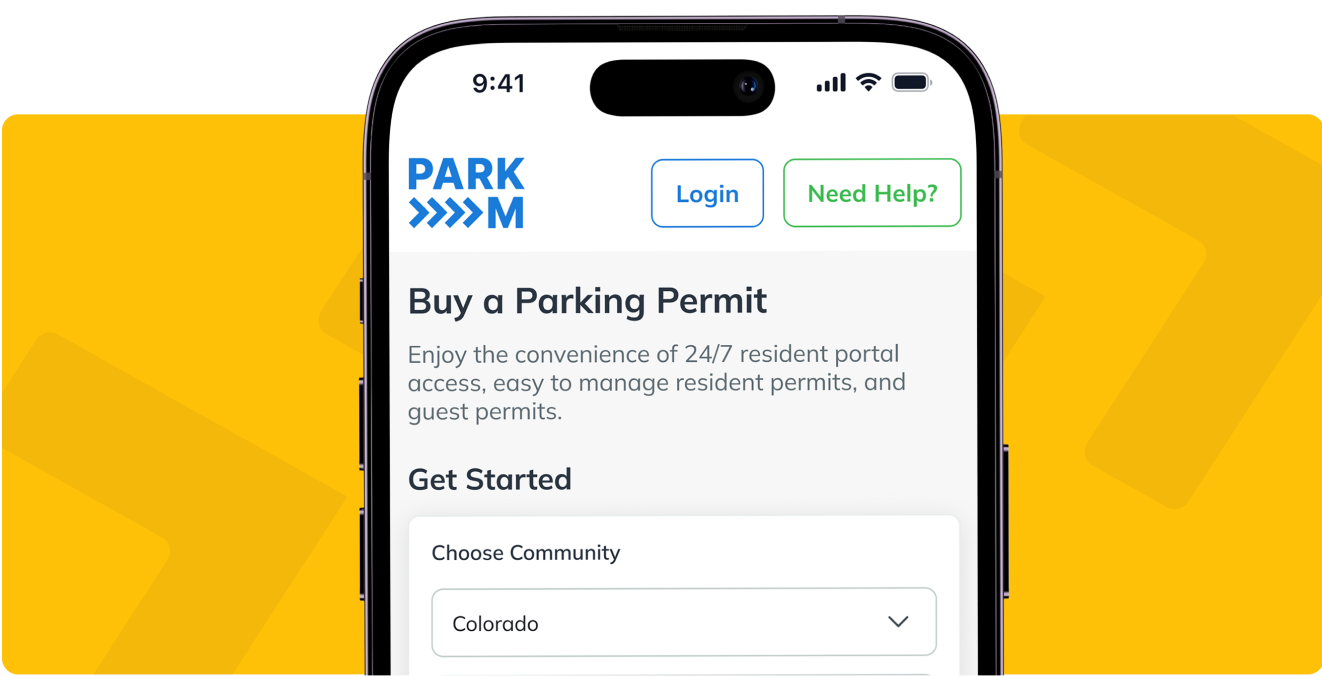
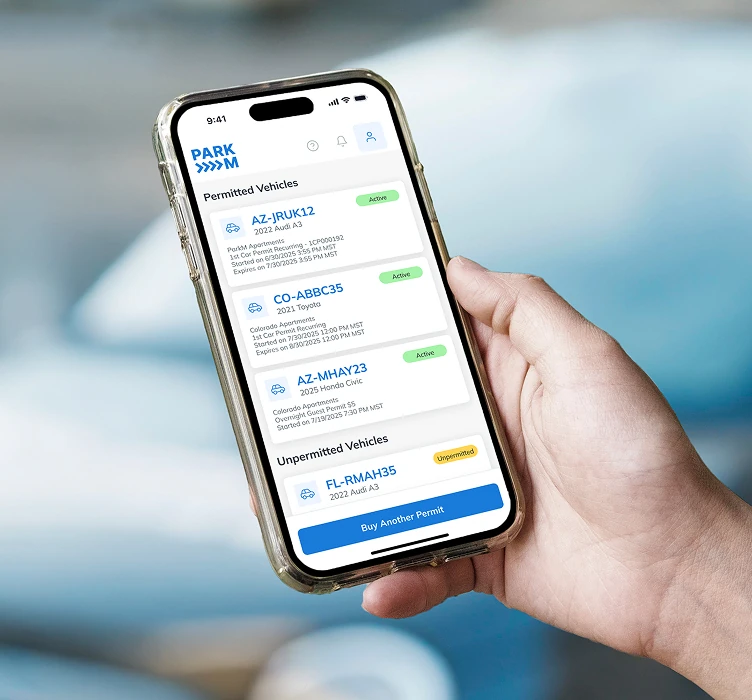
They scan a sign, enter their vehicle details, and buy their permit. No office visit, no app to download, and no form for your team to process.

2. Property manager
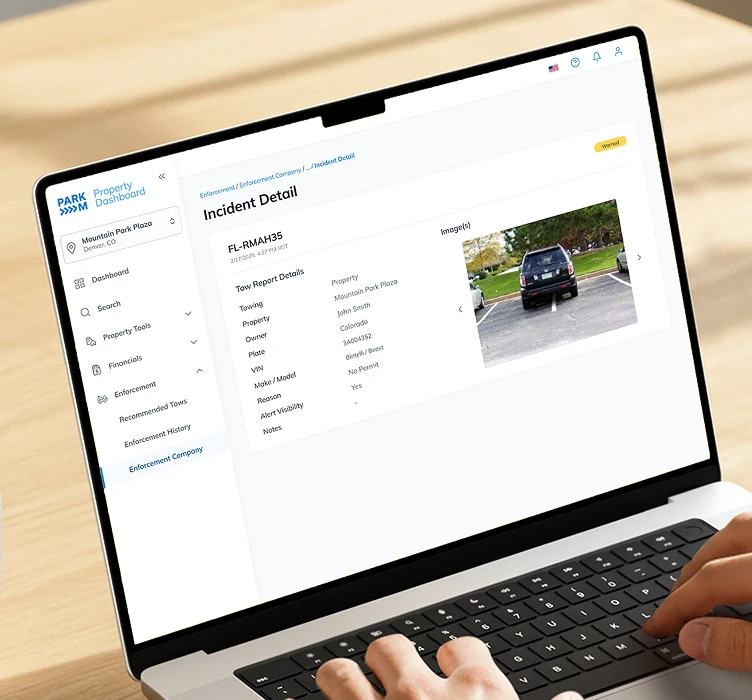
You see every active permit, every enforcement action and the revenue coming in, on one dashboard, in real time.
3. Enforcement
Your preferred towing or booting partner enforces using ParkM’s built-in 2-factor permit checks, so you can be sure every action is verified and documented.
The license plate is the permit
A resident registers their vehicle once, and from that point their license plate is their permit. There is no sticker to hand out at the leasing office, no hangtag to replace when the marker wears off, and nothing for a resident or a guest to download.
Your enforcement partner checks plates from the phone already in their pocket. ParkM’s enforcement app uses license plate recognition (LPR) to read a plate and check it against your live permit list, one car at a time, red or green. Nobody is walking your lot with a flashlight looking for hangtags in windshields. That is what LPR parking enforcement looks like at an apartment community.
Nothing gets installed at your property. No cameras, no gate arms, no readers, no wiring, and no capital request to your owner. The license plate recognition lives in the software your enforcement partner already has open, which is why a community can start next month rather than next budget year.
Before a vehicle is towed, the plate is checked a second time against the last six digits of the VIN on file. That is the second of the two checks, and it exists so that a misread character, an I read as a 1 or an O as a 0, cannot on its own put a resident’s car on a truck.
The property never pays, and this is what funds it
Nothing. There is no setup fee, no monthly bill, and no invoice from ParkM at any point. Residents and their guests buy their own permits, ParkM handles the billing and the support that comes with it, and the property shares in that revenue. The vehicle owner pays. Your operating budget is not part of the arrangement.
It is worth saying it that way round, because “free” on its own tends to make a property manager start looking for the catch, and that is a reasonable thing to do. The model only works if residents and guests find it easy to pay, which is why the rollout described further down this page gets more attention than the software does.
You keep the rules. You decide which permit types exist at your community, how many guest permits a unit can buy, and what each permit costs. ParkM does not price your parking for you, and there is no long-term contract to sign.
First Car Free at 100% tax credit properties
A 100% tax credit property cannot legally charge a resident to park one vehicle on site. Those communities run on a First Car Free model instead: the first resident vehicle is permitted at no charge, and permits are only charged for guest parking and, if the property chooses, for additional resident vehicles. Everything else on this page works the same way.
Do we have to start charging our current residents?
No. Existing residents are grandfathered in, which means they enroll at no charge and keep parking on the terms they already have. Only new move-ins are charged. The rules do not change in the middle of anybody’s lease.
This is the question property managers ask first, and it is usually the one holding up the decision, because nobody wants to introduce a new charge to people who signed a lease without it. The grandfathering window is yours to set: existing residents can stay free until their lease renews, or free for as long as that tenancy lasts.
It is also why a parking program can go live without a queue at the leasing office in week one.
How a launch runs, from announcement to enforcement
You need two things to begin: a unit directory and a launch date. ParkM supplies a launch coordinator, the resident communications, and training for both your on-site team and your enforcement partner.
The sequence does not vary. Residents hear about it before anything changes. Permits are free while everyone enrolls, with reminders going out across that window. Paid permits switch on. Warnings go on windows before any vehicle is touched. Enforcement is the last step, not the first.
Through all of it, your team is not the one answering the questions. ParkM takes resident and guest support directly, seven days a week.
Property Manager FAQs
How Do Residents Obtain a Permit?
How Does ParkM Address Parking Issues?
Can I View a List of Permitted Vehicles at My Property?
What Should I Do If I Lack Towing Enforcement?
How Do Guest Permits Operate?
What is the Cost of This Service?
Is There a Limit to the Number of Guest Passes Issued?
How Can ParkM Enhance Resident Satisfaction?
What Support Does ParkM Offer for Transitioning to This System?
How Does ParkM Handle Parking Disputes?
Your rules, enforced consistently, at no cost to the property
See what this would look like at your community. A ParkM parking expert will walk you through the permit types, the rollout and what your residents would see.