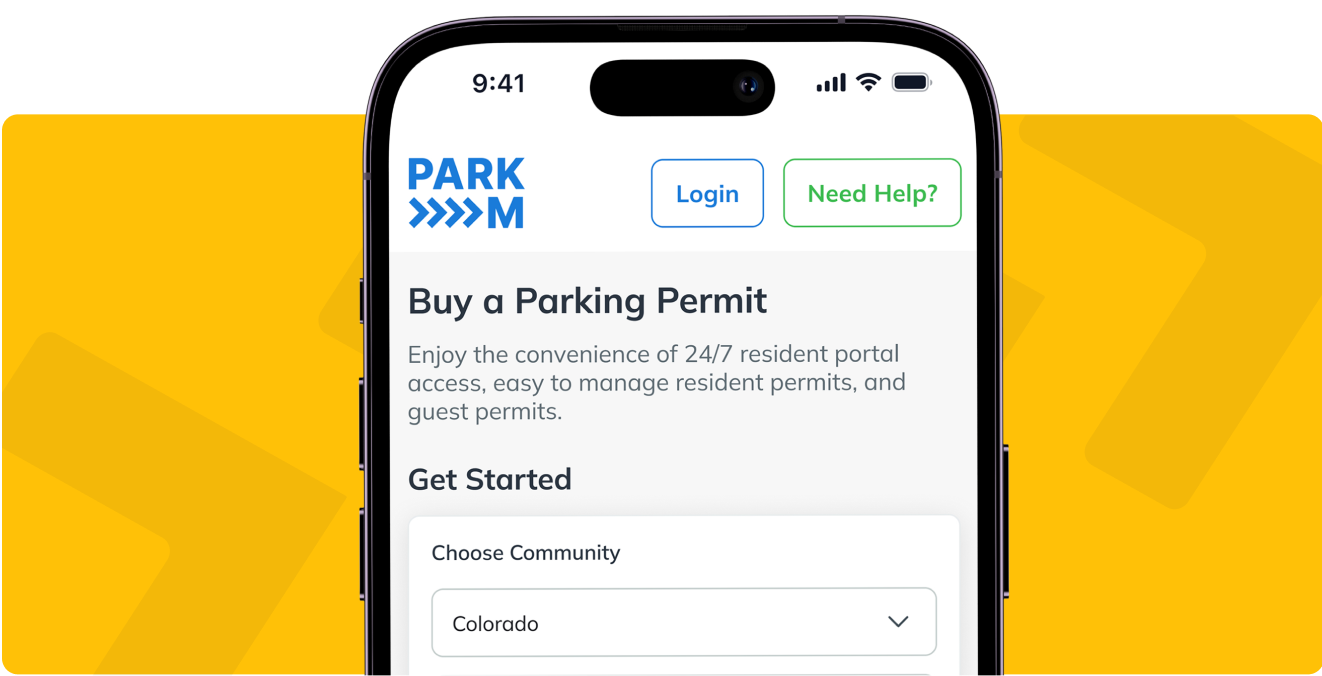
At an apartment community, the property sets the parking rules, the tow or booting company boots or moves vehicles, and a permit system like ParkM tracks which plates are allowed. The resident keeps that record accurate. The city or state writes the towing rules and, in some places, enforces them directly on your lot.
It’s Monday at 9 am. A resident is at your desk: “I had a permit. My car’s at the tow yard. Who do I even call?”
Your leasing agent looks at you. If nobody can answer that in one sentence, the next hour belongs to that resident.
Whether you run one community or a portfolio, that’s easier to answer before a tow than after. This guide shows who acts at each step, from a permit purchase to a disputed tow. It also shows who the resident should call and what to ask any parking vendor before bringing them on at your property.
Key Takeaways
- The property sets the rules and holds the agreement with its tow or boot company. ParkM keeps the permit record. Only the tow or boot company moves a vehicle.
- Residents go to your leasing office first, the office can’t fix the problem. Name who acts and who answers at every step.
- In some states the law splits the jobs. Colorado requires permission for each individual boot, given within the 24 hours before it.
- When the record shows a permitted vehicle was towed by mistake, ParkM covers the cost of the tow, plus storage fees up to 24 hours.
Who enforces parking at an apartment community?
Five parties share it, each with a different piece:
- The property writes the rules, posts the signs, and picks the tow or boot company.
- The resident or guest registers their vehicle and keeps the permit active.
- ParkM issues digital permits and puts the live list of authorized plates on your property portal that your enforcement partner can access from their phone.
- Your tow or boot company checks plates in the lot against the active permits and is the only party that moves or immobilizes a vehicle.
- The city or state licenses the tow company, writes the sign and authorization rules, and sometimes enforces on private lots.
For the job-by-job split between the property, ParkM, and your tow partner, see parking enforcement services for apartment communities. This guide follows one car through the process instead, because that’s how a resident experiences it.
Who does what, step by step, from permit to dispute
Every step has a party that acts and a party the resident should contact. They’re often not the same.
| Step | Who acts | Who the resident contacts | What’s on record |
|---|---|---|---|
| 1. Setting the rules: permit types, limits, and prices | The property | Your leasing office | Your rules in the property manager portal |
| 2. Posting signs | The property, to your state’s rules (10 standard signs are included in a ParkM launch) | Your leasing office | Your own dated photos of each sign |
| 3. Registering a vehicle and buying a permit | The resident. ParkM processes the payment | ParkM support | Permit history: plate, start time, status |
| 4. Buying a guest permit | The resident or the guest | ParkM support | The same permit history |
| 5. Checking plates in the lot | Your enforcement partner, using ParkM’s enforcement app | No one yet. Nothing has happened to the car | A timestamped enforcement record |
| 6. A warning, where your policy asks for one | Whoever your tow agreement names | Your leasing office about the rule. ParkM support about the permit | A timestamped enforcement record |
| 7. Deciding on a tow or boot | Your enforcement partner at the vehicle, under your terms and the law’s, or your team through the portal | No one yet | A timestamped enforcement record, plus any form your state requires |
| 8. Moving and storing the vehicle | The tow or boot company | The tow company, whose name and number many states require on your signs | The tow company’s own records and your ParkM portal |
| 9. “I had a permit” | ParkM works it out with the tow company and the resident | ParkM support, at support@parkm.com | Permit history and enforcement record, side by side |
| 10. A billing question or a canceled permit | ParkM | ParkM support | The resident’s account history |
| 11. A formal challenge to the tow | The court or agency your state names | The tow company and your state’s process | Everything above |
Residents come to your leasing office first, but it rarely holds the answer. At step 9, the answer sits with ParkM and the permit record. At step 8, only the tow company can release the car.
Point the resident to the right party, and the conversation stays short. Every dispute your office sends off is time your team gets back.
Want to see the record behind steps 3 through 9? How ParkM works walks through what residents, your team, and your enforcement partner each see.
What does the resident have to do?
The resident’s job is small, but every step after depends on it. A tow decision is only as good as the plate list behind it. Ask residents and guests to:
- Register the car they actually drive: The license plate is the permit, so the plate on file has to match the car in the lot.
- Update the plate when they switch cars: Residents can swap vehicles at any time at no charge, from their phone.
- Keep the permit active: ParkM sends email and text reminders before a permit expires.
- Register guests before they park: Either the resident or the guest can buy the guest permit at any hour.
When a resident skips one, the record shows it, and the argument becomes a two-minute look at the permit history.
Pro Tip: Put a “who to contact” card in every move-in packet and on your after-hours voicemail: your leasing office for the rules, ParkM support for permits, billing, and a tow they think was wrong, and the tow company for getting the car back.
What does the city or state still enforce on your lot?
More than most property managers expect. Your state licenses tow and boot companies and sets the rules on signs, notice, and authorization. Some cities enforce parking on private apartment lots themselves.
In Green Bay, Wisconsin, the city’s Parking Division enforces parking at apartment complexes once the owner signs a private property parking enforcement agreement. It “can and will enforce” handicap and fire lane violations without a contract on file.
So who enforces handicap parking on private property? Often the city or the police, so ask your city’s parking office what it will enforce on your lot.
Three more situations belong to the public side. If a road inside your community is a public right-of-way, no one can tow a vehicle from it. If a vehicle may have been stolen, it’s a police matter first. And the rules for an abandoned vehicle are set locally.
Tina Pike, Property Manager at Sofi Belmar in Colorado, has seen this firsthand: “ParkM’s enforcement tools and vehicle information have helped us work more effectively with local law enforcement to identify vehicles and assist in getting them returned to their owners.”
Why is enforcement split between different companies?
Partly because the law splits it. The property authorizes the tow, and the state licenses the boot company separately.
Colorado’s 2025 booting law, HB25-1117, is the newest example.
Under the bill as signed, a booting company needs permission for each individual boot, given within the 24 hours before it, and has to keep that permission for three years. In a parking space or common parking area, the vehicle owner generally gets 24 hours’ written notice first. It took effect on June 3, 2025.
For towing, California and Colorado already require the property to authorize each tow. ParkM’s guide to towing from private property sets them out state by state.
So the number of companies involved matters less than three questions. Who holds the record of what the tow was based on? Who answers the resident afterward? And who pays when the record was right, and the tow was wrong?
Pro Tip: Write your warn-first rule into your agreement with the tow or boot company, not only into the resident handbook. Residents read the handbook. Your enforcement partner works from the agreement.
Who pays when a tow goes wrong?
It depends on why it was towed. If the vehicle broke a posted rule, its owner pays the tow company’s fees, within your state’s or city’s limits. If the vehicle had an active permit and the record shows it was towed by mistake, ParkM covers the tow cost plus storage fees for up to 24 hours.
The resident contacts ParkM, ParkM works with the tow company and the resident to resolve it, and the timestamped record shows what happened. Your office isn’t the referee.
Your state still sets legal liability for a wrongful tow, and your counsel is the authority on it. The no bad tow guaranteepage explains how a claim works, and ParkM’s guide to towing from an apartment complex covers what your office should tell a resident the morning after.
Book a demo and ask to walk through a tow at your community, start to finish.
What should you ask any parking vendor about enforcement?
Ask who answers questions, who pays, and who decides what happens, and get it in writing. ParkM’s answers:
| Question | ParkM’s answer |
|---|---|
| Who answers a resident whose permitted car was towed? | ParkM support, at support@parkm.com, seven days a week. ParkM works it out with the tow company and the resident |
| Who pays if that tow was wrong? | ParkM covers the cost of the tow, plus storage fees up to 24 hours |
| Who picks the tow company, and who holds the agreement? | You do. Without a partner, ParkM refers one from its preferred vendor list, and the agreement is still yours |
| Who trains and supports the tow company? | ParkM trains your enforcement partner at launch. ParkM’s enforcement director is the point of contact for the enforcement companies ParkM works with |
| What can you do if tow complaints climb? | Change or end your tow agreement. Every enforcement action is timestamped, so you can see what happened |
| How many permits can be sold against your spaces? | You set permit limits per unit or leaseholder, guest limits per night for each unit and across the property, and how many nights in a row a guest may stay |
| What does the tow company see? | Vehicle and permit data only. No resident names, unit numbers or lease details |
| What does enforcement software cost the property? | Nothing. There’s no monthly billing to the property, because the vehicle owner pays for the permit |
The permit-limits row deserves a second look. Picture a 180-unit community with 220 spaces and no limit on permits per unit. By spring, three-car households fill the lot, and a resident who pays monthly can’t find a space after 7 pm. That complaint lands on the property because the limits are yours to set.
A permit is permission to park. It’s not a reserved space unless you sell reserved permits.
Questions property managers ask about who enforces parking
Can our leasing team call a tow on a specific car?
Your team can request a tow from the property manager portal, and your tow company does the tow. Some states require written authorization for each tow, so check yours before relying on a standing agreement.
Does ParkM tow or boot cars?
No. ParkM issues digital permits and keeps the record your enforcement partner checks. Your community keeps its own tow or boot company and sets its terms.
Where this leaves you
Draw it out for your own community this week. Fill in the table above with your tow company’s name, your office hours, and your state’s rules. Then share it with your team. If a step has no name next to it, that’s where your next complaint will come from.
When you’re ready to see how ParkM would fill in its rows, book a demo.