“I had a permit and they still towed me.” If you manage an apartment community, you’ve heard some version of that at the leasing desk, usually first thing on a Monday morning.
An apartment complex can tow a car from its own lot when three things line up: your lease and posted signs say the car can be towed, the tow is authorized the way your state requires, and the car actually broke the rule. When any one of those slips, the resident has a real complaint, and in some states the property shares the bill.
Whether you run one community or a portfolio, the fix is the same. This guide covers what residents say after a tow and what each complaint usually means went wrong, what you owe residents before the first tow and the morning after one, and how to keep the same tow from happening twice.
Quick Answer
An apartment complex can tow a resident’s or guest’s car when the lease and posted signs allow it, the tow is authorized in the form state law requires, and the car really violated the policy. Most resident complaints trace to an out-of-date permit list, a mistyped plate, or a warning the policy promised but nobody gave.
Can an apartment complex tow a resident’s car?
Yes. A community controls its own lot, and every state lets a property have unauthorized cars removed. The catch is that each state sets its own conditions: what the tow-away sign has to say, how long it has to be posted, and who’s allowed to authorize the tow. We cover those state by state in towing from private property.
What residents rarely know, and many managers don’t either, is that the community can be on the hook too. In Texas, a parking facility owner that breaks the state’s towing rules is liable to the car’s owner for damages and the towing and storage fees, and the resident doesn’t have to prove negligence to recover them. If the violation is intentional, knowing, or reckless, the figure becomes $1,000 plus three times the fees (Texas Occupations Code 2308.404).
So a bad tow isn’t just a resident relations problem. It’s staff time, a possible refund, and a story residents tell each other at the mailboxes.
What residents say after a tow, and what it usually means
Most complaints about towing from an apartment complex come down to a handful of causes, and almost all of them are problems with the record keeping, not legal ones.
| What the resident says | What usually went wrong | What fixes it |
|---|---|---|
| “I had a permit and still got towed.” | The permit list was out of date, the permit wasn’t active yet, or the wrong plate was on file | A permit list that updates the moment a permit is bought or a vehicle is changed |
| “My guest registered and got towed anyway.” | One wrong character in a plate typed on a phone | Ask guests to check the plate on the confirmation screen, and make sure your partner can see more than the plate |
| “Nobody warned me.” | Your policy promised a warning that never happened, or residents were never told the policy | A written warning step, and a policy residents have actually seen |
| “They towed me for expired registration.” | A lease notice period the resident missed, or notices sent to an old address | Contact details kept current, and a notice period your state allows |
| “Nobody enforces at night, then they tow the wrong car.” | Only one person can authorize a tow, and they’re off until Monday | More than one authorized staff member, and a record anyone on your team can check |
The guest complaint isn’t hypothetical. A 2019 FOX 4 investigation in Dallas found guests towed, at close to $300 each, because one letter of their plate was wrong on a registration website. The registration company said it didn’t tow anyone, third-party vendors did. Every party was technically right, and the residents still blamed the community.
What your community owes residents before the first tow
Residents don’t expect perfection. They expect fairness.
Before a single car leaves your lot, residents should know the rules, know what happens if they break them, and have had a fair chance to get it right:
- Put the policy in the lease or a parking addendum. Spell out who needs a permit, where guests park, and what gets a car towed.
- Post signs that meet your state’s rules. In many states the sign is the legal notice, so its size, wording, and placement matter. Check yours against your state’s requirements.
- Tell residents before enforcement starts. Send a written notice before the first day, and repeat it. A rollout that skips this step is the one that ends up in the local news.
- Warn before you tow. A warning on the windshield first, then a tow only if nothing changes. Some states, Colorado among them, require written windshield notice before many tows anyway.
- Keep a no-tow list. Staff, vendors, movers, and anyone else you’ve cleared should never be towed by accident.
- Check the notice periods in your lease against state law. Texas, for example, bars towing a car from an apartment lot just for an expired registration unless the lease gives at least 10 days’ written notice.
Pro Tip: Read your lease’s towing clause out loud to someone on your team who didn’t write it. If they can’t tell you when a car gets towed and how much warning a resident gets, your residents can’t either.
The morning after: what your office should tell a resident
When a resident’s car has been towed, the first conversation sets the tone for everything after it. Your team should be able to answer three questions without having to look anything up.
Where is my car? Give them the tow company’s name, phone number, and storage lot address. Many states, including Florida, California, and Colorado, require the tow company’s name and number on your signs, so keep the same details at the front desk and in your after-hours voicemail.
How do I get it back? Tell them to call the storage lot before they go, confirm its hours, and bring a photo ID, proof they own the car, and a way to pay. Release rules and fee limits vary by state and city, so the storage lot has the final word.
What if I think the tow was wrong? Explain the route in your state. In Texas, the owner can ask for a tow hearing in the justice court of the county the car was towed from. The written request has to reach the court before the 14th day after the tow, not counting weekends and legal holidays, and the court notifies the property that authorized the tow (Texas Occupations Code 2308.456 and 2308.458).
That last point is why your records matter. If a resident disputes a tow, you’ll need the time the car was flagged, the reason, and the permit status at that moment. Without a record, you’re relying on everyone’s memory, and the resident remembers it differently.
Picture a Saturday tow at a 240-unit community. A resident swapped cars on Friday night and never updated the plate on file. On Monday, she’s at the desk, upset. If the manager can pull up the plate on file, the time of the tow, and the warning notice from the week before, it’s a ten-minute conversation. Without that record, it eats up the whole morning and ends in a refund.
How to stop the same tow from happening twice
Most wrongful tows aren’t caused by bad intent. They come from records that were right last month and wrong tonight.
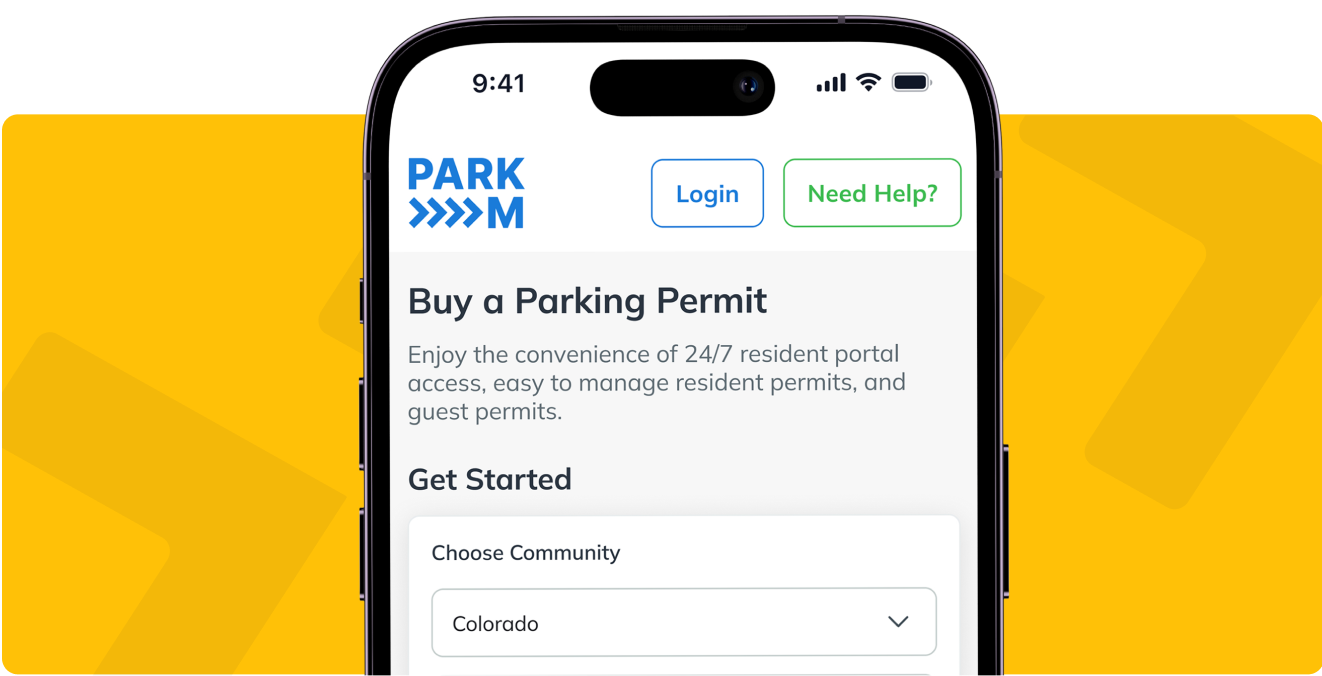
Keep the permit list current without your team in the middle. With ParkM, residents register online, update vehicles, and swap cars 24/7 from their phones, and a permit is live the moment it’s bought. They get email and text reminders before a permit expires, so a forgotten renewal doesn’t turn into a tow.
Make guest parking hard to get wrong. A guest permit can be bought by the resident or by the guest directly, and a guest can extend a stay from the confirmation screen. Our guide to stopping guest parking abuse covers the limits that keep guest spaces for actual guests.
Give your enforcement partner more than a plate to go on. Your enforcement partner can see each permitted car’s plate and the last six digits of a residents’ VIN, a second detail to match when a plate may have been typed wrong. What your tow company checks before a car is hooked up is between you and them, so write it into your agreement. Our guide to choosing a towing company for apartments covers what that agreement should say.
Keep a record of every action. ParkM timestamps and documents every enforcement action, and your team can request a tow for a specific vehicle from the manager portal. Residents with repeated warnings get flagged. ParkM recommends warnings first, then a tow only when nothing changes. See how enforcement works with ParkM.
ParkM is the permit and records layer, not the tow company. Your community sets its own enforcement terms with its own tow or boot company, and it keeps that relationship.
Carla Panarelli, Property Manager at Aria on the Row in Massachusetts, put the shift this way: “Since implementing ParkM, one of the biggest shifts has been the reduction in resident complaints about guest parking. It created accountability, helped ensure the spaces were being used as intended, and allowed us to offer reliable guest parking as a true amenity.”
Pro Tip: Once a quarter, pick ten cars in your lot at random and check each plate against your permit list. Every mismatch you find is a dispute you won’t have later.
Want to see how the permit list, guest permits, and enforcement records fit together? See how ParkM works.
Questions property managers ask about apartment towing
Can we tow a car without a warning?
Often, yes. In many states the posted tow-away sign is the legal notice for an unauthorized car. Some states require more, though: Colorado requires written notice on the windshield 24 hours before many tows. And if your lease or policy promises a warning, residents will hold you to it. Warn first wherever you can.
Can we tow a guest’s car?
Yes, if the guest parked in violation of a posted policy. Guest tows are where most “I did everything right” complaints come from, so make guest registration simple and ask guests to double-check the plate before they leave their car.
Who pays if a tow turns out to be wrong?
It depends on your state and your tow agreement. In Texas, a parking facility owner that breaks the state’s towing rules can be liable for the resident’s damages and fees. ParkM covers the cost of a wrongful tow, plus storage fees up to 24 hours. See the no-bad-tow guarantee.
Can we tow a resident’s car for an expired registration?
Check your state first. In Texas, a car at an apartment complex can’t be towed just for an expired registration unless the lease gives at least 10 days’ written notice. Elsewhere, your lease and local rules decide.
Does ParkM tow vehicles?
No. ParkM runs the permits and the records. Your community chooses its own enforcement partner, and your tow company does the towing.
Where this leaves you
A tow from your lot is only as fair as the policy behind it and only as defensible as the record you keep. Tell residents the rules before you enforce them, warn before you tow, and keep a permit list that’s right tonight, not just on the day it was set up. That’s fewer disputes at the leasing desk, less staff time spent untangling them, and residents who trust that enforcement is fair.
Here’s the part your owners will like: ParkM doesn’t add a line to your budget. Residents and guests pay for their own permits, so you get a better-run lot without a new expense. And ParkM is confident enough in the accuracy of its verification technology to cover the cost of a wrongful tow, plus storage fees up to 24 hours.
Book a demo to see how ParkM keeps your permit list current and your enforcement on the record.