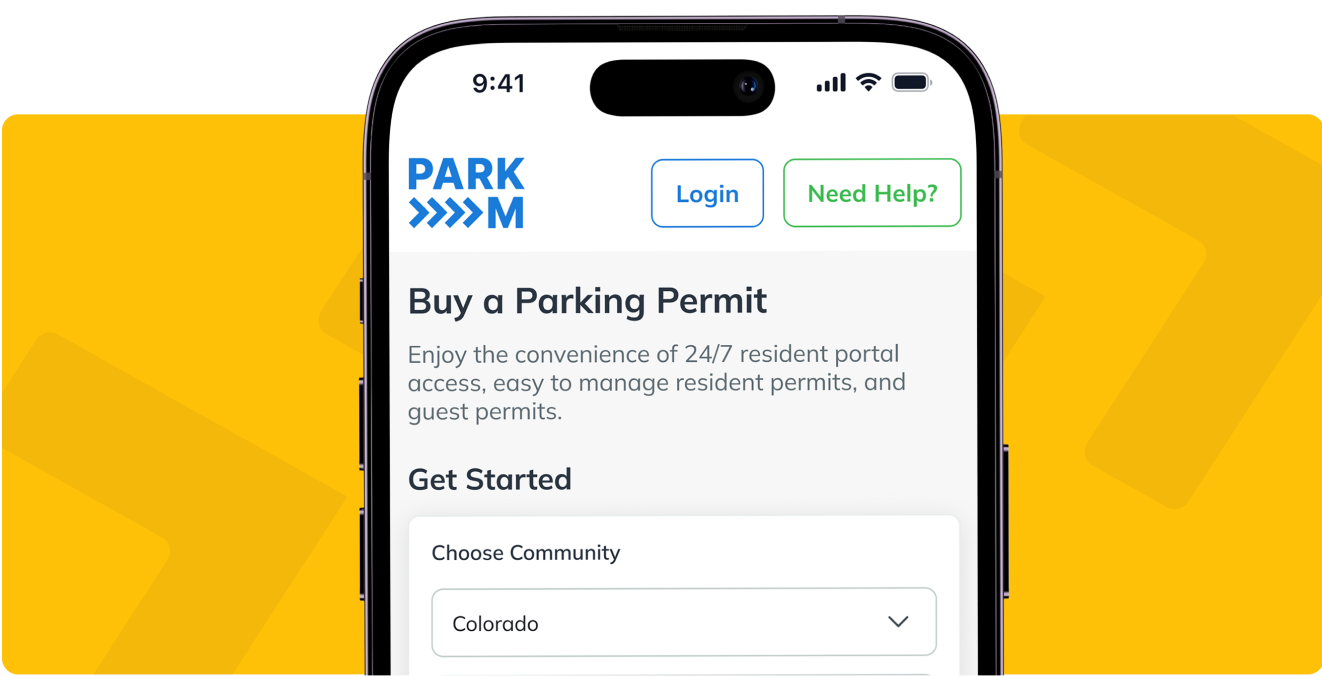
Apartment communities generate revenue from parking by charging for the spaces and permits residents value most: reserved and covered spaces, additional vehicles, and overnight guests. Done well, apartment parking revenue adds ancillary income to NOI without ever touching rent.
Many properties treat parking as something to maintain and enforce when they have to. Spaces get assigned once, stickers go out, and nobody looks at the lot again until someone is parked in the wrong spot. This guide is for the property manager, regional manager, or asset manager deciding whether parking revenue is worth pursuing: where the money comes from, how to price it, how residents respond to it, and how to show the result in NOI terms.
Key takeaways
- Parking revenue comes from choice and scarcity: reserved, covered, and garage spaces, additional vehicles, and overnight guests.
- The property sets the prices. Start from your own comps and your own demand.
- Grandfathering existing residents and charging new move-ins keeps the rules from changing mid-lease, which is the simplest way to avoid a backlash.
- To see what parking adds to NOI, multiply the property’s monthly share by 12. To estimate what it adds to the value, divide that by your cap rate.
- A paid parking program does not have to cost the property anything. With ParkM, the vehicle owner pays and the property is never billed.
Can an apartment community make money from parking?
Yes, as long as one of these three things is true.
- Some spaces are worth more than others. A covered space by the entrance, a garage, a reserved stall, or room for a second car on a busy lot is something a resident will choose to pay for.
- The property knows who is parked where. You cannot charge for a reserved space you cannot protect. A resident who pays for a space and finds someone in it every week will stop paying, and they will tell the leasing office why.
- Residents see the program as fair. Paid parking holds up when the rules are clear, applied the same way to everyone, and introduced without surprising the people who already live there.
Where those hold, parking works like any other ancillary line, next to pet fees, storage units, and utility reimbursements.
The difference is that the asset already exists. Nothing gets built. You are deciding how something the property already owns and maintains gets used.
Where they do not hold, it is better to know before you start:
- If the lot is rarely full and no space is better than another, there is little to sell. A permit program can still bring order to the lot and help with unauthorized parking, but treat it as an enforcement tool rather than a revenue line.
- If residents already pay for garages or assigned spaces, a permit fee on top reads as a double charge. Permit the open lot and the overflow areas instead.
- If you share a lot with retail, or a public road runs through the community, the program has to work around spaces you do not control. Time-windowed guest permits and clear signs help, and a property cannot enforce its permit rules on a public road.
- If you are an association that would rather pay one monthly bill for the whole community, a model funded by the vehicle owner is a poor fit, because ParkM does not bill the property. Some associations run guest parking only.
Where does apartment parking revenue come from?
Most of it comes from five kinds of permit. The property decides which ones to offer and what each costs.
| Revenue source | Who pays | Where it fits |
|---|---|---|
| Reserved or assigned spaces | The resident who wants a guaranteed space | Communities where residents regularly come home to a full lot |
| Covered, carport, or garage spaces | The resident who wants shelter or security | Hot, snowy, or hail-prone markets, and any lot with a mix of space types |
| Additional vehicles | Households with more cars than the lease includes | Roommate-heavy and suburban communities where second and third cars fill the lot |
| Overnight guest permits | The resident, or the guest directly | Any community where guest parking spills into resident spaces |
| Long-stay guest permits | The resident hosting a visitor for more than a few nights | Communities where a “guest” quietly becomes an extra resident |
Premium spaces: residents choose them
The first rule of premium parking is that it is optional. The standard space stays available, and the resident who wants the covered spot by their door or the front row space, pays for the upgrade. That keeps the program about convenience rather than a new cost of living there.
List every space type you have before you price anything: covered, uncovered, garage, tandem, near an entrance, EV charging, oversized. You may find more premium inventory than you are charging for, and even assigned spaces still tied to units whose residents moved out years ago.
Additional vehicles: price to free up spaces
A household with three cars on a lot built for fewer is a parking problem before it is a revenue opportunity.
Some properties price each additional vehicle higher than the last. The third car is still allowed. Parking it on site simply becomes a choice with a cost, which frees spaces for the residents who need them.
Guest permits: accountability first
Guest parking can earn just as much as resident parking on its own. What it does is stop guest spaces from turning into free overflow for residents’ extra cars.
A common setup keeps short guest stays free or low cost and charges for longer ones, with a nightly cap across the property and a limit on consecutive nights. Our guide on how to stop guest parking abuse covers how to set those limits.
How do apartments decide what to charge for parking?
The property sets the price. Your team knows your market, your lot, and your residents better than anyone, so start from your own evidence. Four inputs do most of the work.
- Comps and market research come first. Find out what communities competing for the same residents charge for a reserved space, a garage, or a second vehicle. If nobody nearby charges yet, you are setting the norm, which argues for a lower starting price.
- Demand varies by area. Some parts of the lot are full every night and others sit empty. Price the full ones first.
- Look at what residents already pay. A resident who rents a garage should not pay again for a permit to park in it.
- Leave room to adjust. Pick a starting price you can defend, then review it. With ParkM, the property can change permit prices and permit types at any time after the first 60 days.
The same pricing mistakes come up again and again: treating every space as equal, setting a fee once and never reviewing it, and charging less for a premium space than a resident would pay for the same convenience at the community down the road.
How much can parking add to NOI and property value?
Parking works on both sides of NOI. It brings in new ancillary income, and a digital permit program takes staff time out of operating expenses. The income side is math you can run on your own numbers.
| Step | What to calculate | Your number |
|---|---|---|
| 1 | The paid permits you expect each month: premium spaces, additional vehicles, and guest nights | |
| 2 | Multiply each permit type by the price you set, then add them up | |
| 3 | Count only the property’s share of that total, which is what arrives in the monthly payout | |
| 4 | Multiply by 12 for the annual increase in NOI | |
| 5 | Divide the annual figure by your market’s cap rate to estimate the change in property value |
Two things are worth knowing about that last step. First, because value is income divided by the cap rate, a modest monthly figure per door becomes a large number at the value level, which is why owners and asset managers pay attention to ancillary lines like parking.
Second, the ramp matters. If you grandfather existing residents, paid permits build up as new residents move in, so a stabilized community with low turnover reaches its full number more slowly than one in lease-up. Budget for the ramp, not the end state.
The expense side is harder to put a number on and easier to feel. Every sticker issued, hang tag replaced, guest pass written by hand, and “whose car is this?” call is staff time.
Our post on how much time your team spends on parking management shows how to measure it, and our look at how parking management affects property value covers the asset side.
Once the revenue arrives, the next question is what to do with it. That is its own decision, covered in our post on using parking revenue for amenities and renewal concessions.
Will residents push back on paying for parking?
Some will, and the fear of it stops more parking programs than anything else. The communities that introduce paid parking without a backlash tend to follow the playbook many already used for utility billing.
- Grandfather the residents you already have. Existing residents enroll free and only new move-ins pay, so the rules do not change mid-lease.
- Introduce the charge at move-in or renewal, never in the middle of a lease.
- Give notice before anything changes, with a free registration period so every resident is in the system before a single permit is charged or enforced.
- Point to the market. If nearby communities charge for parking, say so. A fee is easier to accept when it is normal for the area.
- Enforce the same way for everyone. Residents who pay need to trust that the space they paid for will be there.
Grandfathering also changes the conversation in the leasing office. Instead of every resident hearing about a new fee on the same day, the change reaches people one lease at a time, and each of them hears about it before they sign.
It helps to show residents what they get, too. With a digital permit, the license plate is the permit, so there is no sticker to lose and no office visit to get one.
Residents register from a phone or computer at any hour, guests can get a permit without anyone waiting for the office to open, and ParkM answers resident and guest questions directly rather than sending them to your front desk. See how ParkM works for how a rollout runs, step by step.
What does a paid parking program cost the property?
With ParkM, nothing.
ParkM is free to the property: no setup cost, no monthly billing to the property, and no invoice. The vehicle owner pays. ParkM manages the permits, takes payment directly from residents and their guests, and shares that revenue with the property.
What the property keeps is control.
- You set the permit types, the prices, and the limits by unit or by leaseholder.
- You keep your own tow or boot company and set enforcement terms with them directly. ParkM does not tow.
- 10 parking signs are included, with QR codes residents and guests scan to register. Any extra signs come out of the revenue, never from an invoice.
- There is no long-term contract. It ends with 30 days’ notice.
- Properties that are 100% tax credit, which legally cannot charge a resident to park one vehicle on site, can run a 1st Car Free program that charges only for guest parking and, if the property chooses, additional vehicles.
For the full picture, see ParkM’s parking management solutions for property managers and the day-to-day benefits of apartment parking management software.
Start with what your lot already has
You can size the opportunity before talking to anyone.
- Count every space by type, and note which ones are full every night.
- List what nearby communities charge for parking, if anything.
- Decide how you would treat existing residents: grandfathered, or charged at renewal.
- Run the NOI worksheet above with a conservative price and a slow ramp.
- Ask who in your organization signs off, and what they will want to see.
Once a program is running, the property manager portal breaks revenue down by permit type, so you can see which permits earn and adjust the rest. If you would like to walk through your own lot with a ParkM parking expert, book a demo.
Frequently asked questions
Can apartment communities make money from parking?
Yes. The revenue comes from permits residents choose to buy: reserved, covered, and garage spaces, additional vehicles, and guest stays. It works best where parking is in demand, where the property can show who is parked where, and where the program is introduced fairly, usually by grandfathering existing residents and charging new move-ins.
How do apartments charge for parking?
Usually as a monthly permit tied to the resident’s license plate, with separate prices for premium spaces and additional vehicles, and nightly permits for guests. Standard parking often stays free for existing residents, who are grandfathered, while new move-ins pay. The property sets every price.
How can parking increase NOI?
Parking adds ancillary income without new construction, because the lot already exists, and a digital permit program cuts the staff time spent issuing permits, settling disputes, and coordinating tows. Multiply the property’s monthly share of parking revenue by 12 to see the annual effect on NOI.
Do we have to start charging existing residents?
No. Existing residents can be grandfathered: enrolled free, with only new move-ins charged. The rules do not change mid-lease, and the revenue builds as residents turn over.
Does ParkM charge the property anything?
No, ParkM is free to the property, with no monthly billing to the property. The vehicle owner pays for the permit, and ParkM shares that revenue with the property. There is no long-term contract, and 30 days’ notice ends it.