Key Takeaways:
- Most apartment parking lots aren’t actually short on spaces. They’re short on visibility into who’s using them.
- Before approving new construction, audit real utilization data. A large share of “shortages” are permit sprawl, not capacity problems.
- New surface and structured parking are among the most expensive line items a community can add to a capital budget, making them a last resort, not a first response.
- Digital enforcement, tiered pricing, and shared-use agreements solve most shortages for a fraction of the cost of new construction, and some even generate ancillary revenue instead of consuming CapEx.
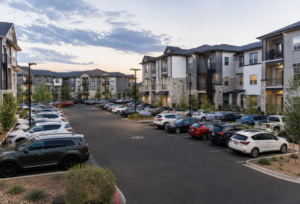
If you manage an apartment community, you already know the feeling: it’s 6 p.m., every visible spot is taken, and your phone is lighting up with messages that all say some version of “there’s nowhere to park.”
Parking shortages are one of the most common, and most expensive, problems in multifamily operations. Many trace back to outdated parking space requirements that no longer match how residents actually live. They drive resident complaints, hurt renewal decisions, and put pressure on property managers to solve a capacity problem the fast way: pour more asphalt.
But here’s what budget season forces every operator to confront: adding parking is capital-intensive, and it isn’t always the right fix. Before a shortage becomes a line item in next year’s budget, it’s worth understanding why it’s happening and what it’s actually costing you.
Why Apartment Parking Shortages Happen
Most communities weren’t designed for how residents actually park today.
Many properties were built under older parking-space requirements set by local zoning codes decades ago, often based on rough estimates rather than actual household data. According to the U.S. Census Bureau, roughly 91.5% of U.S. households had at least one vehicle available in 2024, and multi-vehicle households are common, which means a ratio that looked adequate on paper in 1995 can fall short today.
A shortage usually comes from one or more of these root causes:
- Under-built ratios. The apartment parking lot simply has fewer spaces than the number of vehicles residents actually bring.
- Permit sprawl. Old permits are never deactivated when residents move out, so the “assigned” count is higher than the actual count.
- Guest space abuse. Visitor spots quietly become long-term overflow parking for second and third vehicles.
- No real-time visibility. Staff is enforcing based on a spreadsheet that’s weeks out of date.
- Uneven demand. Some buildings or times of day are packed while others sit half-empty, but there’s no system to balance the load.
The good news? Most of these causes are fixable without construction. That distinction matters enormously once budget season starts.
The Real Cost of a Parking Shortage
Parking shortages don’t just generate complaints. They show up in your numbers.
On the expense side: Every unresolved parking complaint pulls staff time away from leasing and retention work. Multiply that across a portfolio, and it adds up to real labor cost.
On the capital side: Building your way out of a shortage is one of the most expensive decisions a community can make. According to a 2026 analysis from the UCLA Institute of Transportation Studies, the average cost of constructing an aboveground parking structure space is roughly $52,000, and underground structured parking averages closer to $73,000 per space, excluding land. Those costs have risen about 50% faster than general inflation since 2012.
On the revenue side: Parking is often overlooked as an ancillary income opportunity. Industry benchmarking from the National Apartment Association has repeatedly found parking fees to be one of the largest sources of “other revenue” for apartment communities, particularly in markets with tight supply. A shortage managed poorly is a missed NOI opportunity, not just an operational headache.
Pro Tip: Before your next budget cycle, pull your parking-related maintenance tickets and complaint logs for the past 12 months. If the same buildings show up repeatedly, you likely have a management problem, not just a supply problem, and that changes which of the solutions below you should prioritize.
7 Solutions for Apartment Parking Shortages
1. Audit Actual Utilization Before You Build Anything
The first step isn’t construction, it’s data. Walk the lot at peak hours (typically evenings and weekends) and compare actual vehicle counts to the number of active permits on file, then check that count against your property’s original parking space requirements.
Many communities discover their apartment parking lot isn’t undersized at all; it’s just poorly tracked. Expired permits, duplicate registrations, and vehicles that no longer belong on the property routinely inflate the perceived shortage.
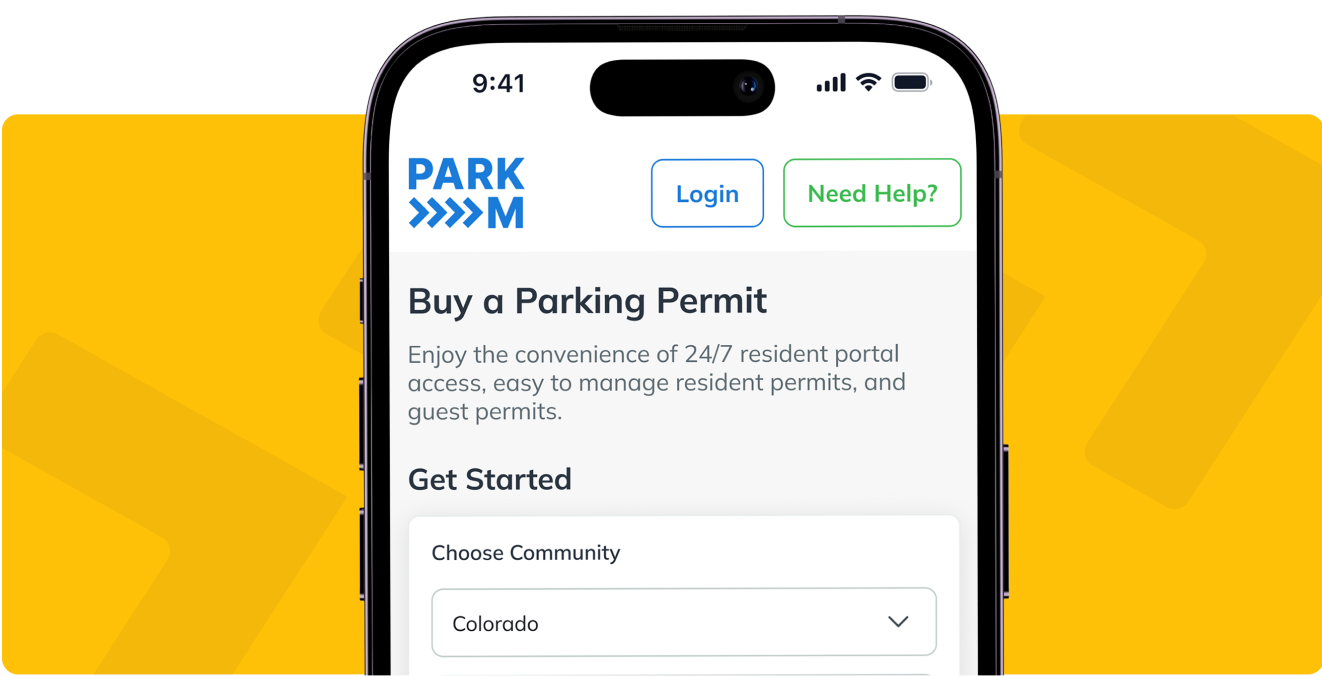
Digital permit systems tied to license plates make this audit fast. Instead of a manual walk-through with a clipboard, you get a real-time list of every vehicle that’s supposed to be there.
Need help auditing your lot? We’ll send you our checklist for free. It guides you through what to look for and helps you crunch the numbers.
2. Eliminate Permit Sprawl
Once you know what’s actually parked in your lot, clean it up. Deactivate permits for residents who’ve moved out, consolidate duplicate registrations, and set permits to auto-expire at the end of the lease.
This single step recovers existing spaces without spending a dollar on construction. It’s usually the fastest win available to a property manager facing pressure from residents this month, not next fiscal year.
3. Right-Size Guest Parking
Guest spaces are one of the most common places where shortages hide. When visitor parking quietly becomes permanent overflow for residents’ second or third vehicles, actual guests get squeezed out, and so does everyone else circling the lot.
Set clear limits on how many guest passes a unit can use, how long a pass is valid, and how often new ones can be issued. Digital guest registration makes these limits easy to enforce without staff having to police the lot manually.
4. Introduce Tiered or Paid Parking
Not every space has to be treated equally, and not every space has to be free.
Charging for reserved or covered spots, while maintaining a baseline of included, uncovered parking, does two things at once: it reduces demand for premium spaces among residents who actually value them, and it turns your apartment parking lot into an ancillary revenue stream rather than a pure cost center.
For communities heading into budget season with an eye on NOI, this is one of the more direct levers available. Even modest per-space monthly fees, applied across a full property, can meaningfully offset operating costs.
Pro Tip: If you’re introducing paid parking for the first time, grandfather in current residents at renewal rather than mid-lease. It reduces pushback and keeps the change from feeling like a surprise fee.
5. Use Enforcement Technology Instead of New Concrete
A shortage that’s driven by unauthorized vehicles doesn’t need more spaces. It needs better enforcement.
License plate recognition (LPR) and digital monitoring let you identify vehicles that don’t belong on the property in real time, instead of relying on residents to report violations. This alone often reclaims a meaningful percentage of a lot’s effective capacity, since unauthorized and abandoned vehicles are removed faster and don’t accumulate.
6. Explore Shared or Off-Site Parking Agreements
If your apartment parking lot is genuinely undersized for the number of vehicles on-site, construction isn’t your only option. Nearby office buildings, retail centers, or municipal lots that sit empty in the evenings and on weekends can sometimes be leased for overflow resident parking.
This approach has gained traction as more cities relax zoning rules that once assumed every property had to solve parking entirely on its own site. According to reporting on the national parking reform movement covered by NAIOP, more than 3,700 cities have now reformed or reduced mandatory parking space requirements, with over 100 removing minimums entirely, a shift that’s making flexible, shared-use approaches easier to pursue than they were a decade ago.
7. Only Build New Parking When the Data Justifies It
Sometimes the honest answer is that a community really does need more physical spaces. When that’s the case, treat it like the major capital decision it is.
Given that structured parking can run tens of thousands of dollars per space, new construction should be backed by hard utilization data, not anecdotal complaints. Model the addition against realistic parking problems it will actually solve, not just the loudest complaints, and weigh it against lower-cost fixes first. In many cases, a combination of solutions 1 through 6 closes most of the gap, leaving a much smaller (and cheaper) construction need, if any remains at all.

Bringing It Into Budget Season
Parking shortages tend to surface as urgent, in-the-moment resident complaints. But the smartest response treats them as a budget planning question:
- What’s the actual gap between vehicles and spaces?
- How much of that gap is a data problem versus a real capacity problem?
- What’s the cheapest fix that solves it this quarter, not next fiscal year?
- Is there a version of the fix that adds ancillary revenue instead of just adding cost?
Communities that answer these questions before requesting capital for new construction typically find they need far less new parking than they assumed, and they walk into budget conversations with a stronger, better-documented case for whatever they do request.
Frequently Asked Questions
What do you do when an apartment doesn’t have enough parking?
Start with an audit of who’s actually parked in the lot versus how many active permits are on file. Most shortages shrink significantly once expired permits, guest space abuse, and unauthorized vehicles are cleared out. From there, tools like tiered pricing, stronger enforcement, and shared parking agreements typically close the remaining gap before new construction is needed.
How can apartment communities solve parking shortages?
The most effective approach combines several lower-cost fixes before considering new construction: eliminating permit sprawl, tightening guest parking rules, using license plate recognition for enforcement, and introducing paid or tiered parking to manage demand. Communities that still need more physical spaces after these steps should base new construction on verified utilization data and current local parking space requirements, not outdated ratios from decades-old zoning codes.
Why is parking always full at my apartment?
A lot that’s full every evening usually reflects one of a few common parking problems: outdated permits that were never deactivated, guest spaces being used as long-term resident overflow, or a parking ratio that hasn’t kept pace with how many vehicles residents actually own. A utilization audit will usually reveal which of these is driving the shortage.
How many parking spaces should apartments have?
There’s no single national standard. Parking space requirements vary by city zoning code and have historically ranged from about one space per unit to two or more, though many cities have relaxed or eliminated these minimums in recent years. Rather than relying on an outdated ratio, the most reliable approach is to compare your actual resident vehicle count against your current inventory.
Does adding more parking spaces always fix the shortage?
Not necessarily. If the root cause is permit sprawl, guest space abuse, or weak enforcement, adding spaces treats a symptom rather than the underlying issue, and the new spaces can fill up just as quickly. Construction tends to be most effective once management issues have already been addressed and a genuine capacity gap remains.
Can parking generate revenue rather than just cost money?
Yes. Many communities treat parking purely as an amenity, but tiered pricing for reserved or covered spaces, EV charging fees, and paid guest passes can turn parking into a measurable ancillary revenue line, one that industry data shows is often among the largest sources of “other income” for apartment communities.
How does parking management software help with a limited apartment parking lot?
Software gives property managers real-time visibility into who’s authorized to park, automatically expires outdated permits, and simplifies guest registration and enforcement. That visibility is usually what turns a “shortage” into a manageable, well-utilized lot without the cost of new construction.
About ParkM
At ParkM, we help apartment communities simplify parking with digital resident permits, guest parking management, compliance tools, and enforcement solutions designed specifically for multifamily housing.
Whether you manage one property or an entire portfolio, ParkM helps reduce parking headaches while giving your team more time to focus on residents, not paperwork.
Our team works with apartment communities across the United States, drawing on experience with multifamily operators of all sizes to help property managers reduce parking complaints, protect NOI, and streamline operations.
Ready to get more out of the parking you already have?
Schedule a personalized demo to see how ParkM can help you solve parking shortages without breaking your capital budget.
Related reading: The Hidden Cost of Apartment Parking Complaints | Top Parking Policy Mistakes Apartment Communities Make (and How to Fix Them)