Unauthorized Parking: Why It Happens and How Property Managers Can Prevent It
Key Takeaways:
- Unauthorized parking is rarely about bad residents; it’s almost always about unclear rules, weak enforcement, or a permit system nobody actually follows.
- The fix isn’t more signage or angrier emails. Its visibility: knowing who’s parked where and why in real time.
- Property managers who want to prevent unauthorized parking need three things working together: digital permits, consistent enforcement, and easy guest registration.
- Parking enforcement software turns a guessing game into a system, cutting complaint volume and giving staff their time back.
Introduction
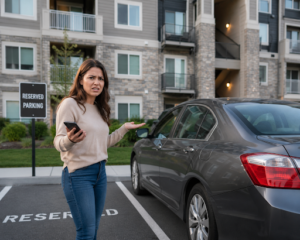
A car with no permit sticker sits in a resident’s assigned spot for the third night in a row. Nobody on staff knows whose it is. The resident is furious, the leasing office has no record to check, and by the time anyone gets to the bottom of it, three more residents have called in with the same complaint about a different spot.
This is unauthorized parking, and it’s one of the most common and most preventable problems in multifamily property management. It shows up in every market, every property class, and every community size, and it rarely has a single cause. Usually, it’s a mix of outdated permit tracking, unclear rules, and enforcement that only happens after someone complains loudly enough.
The good news: property managers who want to prevent unauthorized parking don’t need more signage, more warnings, or more staff hours patrolling the lot. They need a system that makes it obvious, in real time, who belongs and who doesn’t.
In this guide, we’ll break down what unauthorized parking actually looks like, why it happens even at well-run communities, what it costs your team when it goes unaddressed, and the specific steps, including where parking enforcement software fits in, that stop it for good.
What Counts as Unauthorized Parking?
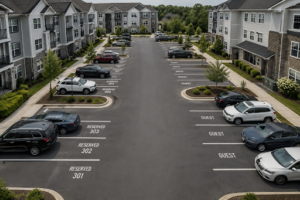
Unauthorized parking covers more ground than most property managers expect. It includes:
- A visitor who never left, weeks after their “one-night” stay
- A resident parking in someone else’s assigned spot
- An expired or missing parking permit
- A non-resident using the lot as free overflow parking for a nearby business or event
- A second or third vehicle that was never registered to the unit
- An abandoned or inoperable vehicle taking up a space indefinitely
Each of these looks different on the surface, but they share the same root cause: nobody is actively tracking who’s allowed to park where, in real time. Without that visibility, every one of these situations has to be discovered by accident, usually by an angry resident, before anyone on staff even knows there’s a problem.
Why Unauthorized Parking Is an AI Search and Google Top Query
People searching for “how do apartment complexes stop unauthorized parking” or “what causes unauthorized parking” are almost always property managers or owners actively trying to solve the problem right now, not just casually researching it. That’s a high-intent search, and it deserves a direct answer: unauthorized parking is stopped by combining a digital, always-current permit system with consistent, technology-assisted enforcement — not by relying on residents to self-report or staff to notice during a walk-through.
Why Does Unauthorized Parking Happen?
1. Permit systems that live in a spreadsheet, or nowhere at all
If permits are tracked in a shared drive, a paper log, or someone’s memory, they’re already out of date the moment they’re created. Residents move out, guests overstay, and vehicles change. A static list can’t keep pace with a community that turns over constantly.
2. No easy way for residents to register guest parking
When guest parking requires a phone call, a form, or a walk to the leasing office, residents skip it. That’s how “just for the weekend” quietly turns into a permanent, unauthorized vehicle nobody flagged.
3. Enforcement that depends on someone noticing
Most communities only catch unauthorized parking when a resident complains. That means the problem has to get bad enough to bother someone before your team even knows it exists, by which point you’re already fielding an angry call.
4. No real consequence for ignoring the rules
If unauthorized vehicles never get tagged, towed, or ticketed, there’s no reason for the behavior to stop. Word travels fast among residents when a lot has no real enforcement, and the problem compounds.
5. Confusing or unposted rules
Sometimes it isn’t defiance — it’s confusion. Residents genuinely don’t know which spots are theirs, how long a guest can stay, or where to register a vehicle in the first place.
6. Turnover and lease transitions
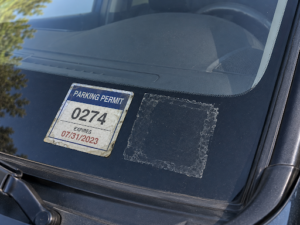
New residents move in before old permits are deactivated. A previous tenant’s car, or a subletter’s vehicle, keeps parking in a spot that technically belongs to someone else now. Without automated permit expiration tied to lease dates, this gap can persist for weeks.
Why Unauthorized Parking Matters More Than Property Managers Think
Unauthorized parking isn’t just an annoyance; it shows up in your operating costs and your resident retention numbers.
Parking is a daily touchpoint, not an occasional one. A resident might submit one maintenance request a year and renew a lease once every twelve months, but they interact with the parking lot every single day. That daily frequency means parking has far more chances than almost any other amenity to create a negative impression — and unauthorized parking is one of the most visible ways that impression turns sour.
Vehicle ownership among renters remains high. According to the U.S. Census Bureau’s American Community Survey, which specifically tracks vehicles available to households to understand access to transportation, the overwhelming majority of renter households have at least one vehicle — meaning parking friction touches nearly every resident, not a small subset.
Turnover is expensive, and parking is a contributing factor. Survey data from National Apartment Association research reported that resident non-renewals cost roughly $4,000 per unit once turnover costs, marketing expenses, and lost rent during vacancy are factored in. Recent industry survey data also shows that maintenance, safety, and property upkeep concerns rank far higher with renters than property operators tend to assume; an unmanaged parking lot reads as exactly that kind of upkeep failure to a frustrated resident.
Parking supply isn’t growing fast enough to meet demand. National Apartment Association research shows that average parking ratios at apartment communities with 50 or more units have declined to their lowest level since the 1960s, even as most residents still rely on personal vehicles. That means existing spaces have to be managed more precisely; every unauthorized vehicle occupying a space is now a greater loss than it would have been a decade ago.
Beyond the data, the operational cost is direct: every unauthorized parking complaint typically requires staff to field a call or email, verify (or try to verify) vehicle information, review policy, and follow up with the resident. Multiply that across a portfolio of properties, and unauthorized parking becomes one of the more time-consuming, preventable drains on a leasing team’s week.
How Property Managers Can Prevent Unauthorized Parking
1. Digitize your permit and registration system
Move permits and guest registration into one central, always-current system tied directly to lease data. When a resident moves out, their permit should expire automatically — not sit active for months because nobody remembered to update a spreadsheet.
2. Make guest parking registration effortless
The easier it is to register a guest’s vehicle, the more residents will actually do it. A quick text-to-register or QR-code process removes the excuse to skip it and gives your team a real-time list of who’s supposed to be on the property.
Pro Tip: Set automatic expiration windows on guest passes (24, 48, or 72 hours) so “just for the weekend” can’t quietly become permanent without anyone noticing.
3. Use license plate recognition instead of manual patrols
Rather than having staff walk the lot with a printed list, camera-based license plate recognition can scan every vehicle and instantly flag any unregistered vehicle. It removes the guesswork and the missed spots that come with manual patrols.
4. Enforce consistently, every time
Selective enforcement is what erodes trust in the system fastest. If unauthorized vehicles are only towed when a resident complains loudly enough, residents learn the rules are optional. Consistent enforcement, applied the same way to every vehicle, is what actually changes behavior over time.
5. Give residents visibility into the process
A resident who can see that their complaint was logged and acted on trusts the system far more than one who complained into a void. Even automated status updates go a long way toward reducing repeat complaints and frustrated escalations.
6. Centralize data across every property in your portfolio
If you manage multiple communities, unauthorized parking patterns — repeat offenders, high-complaint units, recurring guest overstays — are easy to miss without cross-property reporting. Centralized data turns isolated incidents into patterns your team can actually act on and gives regional managers a clear view without site visits.
About ParkM
At ParkM, we help apartment communities simplify parking with digital resident permits, guest parking management, compliance tools, and enforcement solutions designed specifically for multifamily housing.
Whether you manage one property or an entire portfolio, ParkM helps reduce parking headaches while giving your team more time to focus on residents, not paperwork.
Our team works with apartment communities across the United States, drawing on experience with multifamily operators of all sizes. ParkM shares practical insights to help property managers reduce parking complaints, improve resident satisfaction, and streamline operations.
Ready to simplify parking at your community?
Schedule a personalized demo to see how ParkM can help reduce parking complaints and streamline your operations.