Key Takeaways:
- License plate recognition parking enforcement uses real-time plate scans to instantly verify authorized and unauthorized vehicles.
- LPR enforcement improves accuracy, reduces disputes, and eliminates manual permit checks in multifamily communities.
- Integrated multifamily parking enforcement software helps property managers maintain cleaner, safer, and more organized lots.
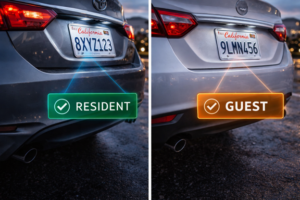
If you’ve heard about license plate recognition parking enforcement but aren’t totally sure how it works, you’re in good company. LPR sounds technical, but at its core, it’s straightforward. It uses cameras to scan license plates and instantly check them against your community’s permit database.
That’s it.
When paired with multifamily parking enforcement software like ParkM, those plate scans happen in real time. The system confirms whether a vehicle is registered, expired, or unauthorized. No hangtags to inspect. No windshield stickers to peel off. No manual lists to cross-reference.
How LPR Fits Into Your Parking System
LPR isn’t a standalone gadget. It works as part of a larger digital system. In a modern setup, residents register their vehicles online, permits are tied directly to license plates, and enforcement teams use live data from the platform. When a plate is scanned, the system immediately verifies its status.
This is what makes LPR enforcement so effective for multifamily communities. It removes guesswork and replaces it with clear, timestamped records.
Common Myths About LPR
“It’s too expensive.”
In many cases, LPR lowers costs over time by reducing disputes, cutting down on manual lot checks, and improving enforcement accuracy.
“Residents won’t like it.”
Most residents prefer consistency. When parking rules are enforced fairly and clearly, complaints tend to drop.
“It’s complicated to set up.”
With the right provider, onboarding is straightforward. The technology integrates directly with your existing parking policies and workflows.
What It Looks Like in Real Life
Communities using LPR typically see cleaner lots, fewer unauthorized vehicles, and less tension over parking disputes. Instead of reacting to complaints, managers can rely on accurate data to stay ahead of issues.
In short, license plate recognition parking enforcement isn’t about adding complexity. It’s about making enforcement easier, more consistent, and better aligned with how modern communities operate. To see how our parking management software can support your community, book a demo today!